Ideas

A Tale of Two Churches

Tale of 2 Churches 1.png

After prayerfully considering our approach, this opinion piece is being published anonymously. The author, as mentioned in the article, “grew up around guns.” To protect the identity of the author, we have removed all identifiers.


At the end of 2019, there was a shooting at a church in Texas where a man shot and killed two people before a member of the church shot and killed him. The whole incident was over in a matter of seconds. The church member’s quick reaction saved lives and prevented untold suffering that morning. As with every shooting incident in the US, major news outlets quickly began the debate about guns and shootings. Each side rehearsed their go-to talking points, except now the right had a perfect example of a good guy with a gun stopping a bad guy with a gun.

As a believer, I couldn’t help but think about another church shooting that happened five years earlier. In 2015, in Charleston, SC, a black church was the site of a mass shooting during a bible study. There was no “good guy” with a gun to stop the shooter there, and instead of a quick resolution, nine lives were lost. However, what dominated the news cycle then was the church’s response. Since the shooter was apprehended alive, the families of victims had a chance to address the young man. What happened is hard to describe in words and is much more impactful in video (take a moment to watch it). The overwhelming mercy that was extended to him through powerful, simple words like, “I forgive you” and “repent and believe,” said more about the Gospel than many preachers say in a lifetime of sermons. Their actions made it nearly impossible for the story to be covered in the media without the telling of the Gospel.

I grew up around guns, as do many Americans, and have never thought of myself as a pacifist. However, over the last several years, I’ve begun to see where Christian pacifists are coming from. I fully support both police officers and the armed forces. I believe that God has structured governments to enforce justice, and sometimes that means violence and even capital punishment. I believe there is nothing in Scripture that prohibits believers from service as a police officer or in the military. However, the more I look into the New Testament, it seems that Jesus’ teachings, and those of the apostles, call us to something radical. I’m not convinced that we should protect ourselves at all cost or cling to this life. Hear me clearly. We shouldn’t actively seek to be victims; we should lock our doors at night and flee from attackers. But, should we fight back?

In the sermon on the mount there is the famous verse where Jesus says to turn the other cheek if someone slaps you. Jesus quotes the Old Testament “eye for an eye” and then calls those listening to instead endure wrongs by not retaliating (Matt 5:39). He urges us to love our enemies and pray for those who persecute us. He tells us that by loving and praying for those who hate us we are like our Father in heaven. Jesus also goes so far as to say that we are no different from the Gentiles if we only love those who love us. Christ did not die on our behalf so that we could remain like the world around us. He calls us to love rather than hate, give rather than horde, lift others up rather than step on or ignore them. While some will claim that this slap on the cheek is more about humiliation than violence, the OT passage where the original “eye for an eye” quote comes from is about justice and retribution in regard to bodily harm.

Theologians often talk about Kingdom reversal, how Jesus often calls us to act opposite from how the world acts. In God’s Kingdom the last is first, the poor are rich, and the humble are exalted. We should ask ourselves, how often do we as Christians agree with the world? Do we agree with them about when life begins? How to spend our money? Do we agree with what it means to have a family? Even when we do agree with the world on something like meting out justice, are our underlying reasons the same?

Jesus’ Last Words

During the last supper, Jesus spends a lot of time preparing the disciples for what will happen when He leaves. In John 15-16, Jesus speaks of the hatred the world will have for them and that some will even kill Christians thinking they are serving God (16:2). He warns them that the world will hate them and reject them because it hated and rejected Him. Persecution is to be expected in the church. Jesus made it clear that only those who lose their lives would find life (Matt 10:39).

Anytime I’ve had this conversation, people agree that we should be prepared to die for our faith when the conversation is abstract or distant. However, when the conversation shifts to more tangible scenarios, like the tragedy in Texas, people quickly want to soften what Jesus is saying by interpreting His words as hyperbole. Obviously, Jesus wouldn’t want us to submit to just any violence, but only that which is the result of our faith. I ask, how are we as believers supposed to know when violence is happening because of sin in the world or when it is happening because of our faith? Should we ask our assailant if they hate us for our beliefs or for something else? Is there even a way to evaluate most cases?

I have sometimes wondered if the US will produce any martyrs on its own soil, or if all of our martyrs will die on the foreign mission field.  I remember youth pastors asking their students if they would die for their faith after the Columbine shooting, but here we are now in 2020 arming our security in our churches. Is church supposed to be a safe place? Will we turn our houses of prayer, where everyone is welcome, into compounds? Or will we love our enemies and trade safety for a chance to live out the sacrifice of the gospel?

How then shall we live?

I’m not sure I have fully convinced myself of the correct answer. I rejoice that many lives were spared at the church in Texas, but I also rejoice at the way God gave the church in SC a platform for the Gospel. I weep over the many lives lost in SC and over the three lost in Texas, including the shooter. The truth is, God works powerfully in times of great pain and allows suffering to enter into our lives for many reasons we can’t comprehend. I doubt I’ll ever carry a gun. However, we are each called to follow the Holy Spirit. While we can discuss theology and ethics all day long, both of these situations happened in the blink of an eye. Only in the Spirit can we ever hope to make the right decision. We must prayerfully seek the Lord in this, allowing His Word and the Holy Spirit to conform us, rather than the fears or agendas of the world around us. The world clings to this life because it is all they have and know. While God gave the right for humans to defend themselves in the Old Testament, Jesus calls us to something greater in order to bring us into His mission to save the world.

By forgoing trying to provide ourselves security in this life, we are fully trusting in the Lord to keep us safe. What is the worst that could happen? We die, murdered by someone for our faith. We would then have the highest honor of sharing Christ’s unjust death! As Paul said, “to live is Christ and to die is gain” (Phil 1:21). D. L. Moody once commented that he was often asked if he had what it took to be a martyr and he humbly stated, “If God should call on me to die a martyr’s death, He would give me a martyrs’ grace.” May God grant us all grace and wisdom as we evaluate how we should think and act in this fallen world, for only in the power of the Holy Spirit can we ever do what is right.

Planting in Babylon Pt. 2

Exodus 1.png

Maybe I’m not over it. Maybe the choice to start by telling this story is proof that it still bothers me. Still. Even if I’m “in my feelings,” I’m convinced he missed the point. Several years ago, while still in grad school, I submitted a paper on a model for multi-cultural congregations that I was quite proud of in the end. I had worked hard on the paper and included a theological argument for diversity I thought was soundly reasoned. When I got it back from my favorite professor, it included this feedback:

“I am puzzled why you have turned to the Exodus narrative to emphasize the multiethnic nature of God’s redeemed people.  Why not [use] the NT passages that more explicitly emphasize … God’s design of making His church multiethnic and its theological significance?”

This question is at the heart of this article. I believe God’s plan was always about making a mestizo people that would reflect His character on earth by making the world as it should be – a place of beauty, justice, and goodness. People failed to do this time and time again, but that doesn’t change the plan. He is redeeming a mixed multitude and calling them to create, to plant gardens, and build communities that set things right and restore His order. If this was always His plan, then it should be seen in the story the first time He rescued people and called them His own. In fact, the identity of Israel should hint to God’s plan for a multiethnic people just as the Church finally displays it. And, it does.

Returning from Exile

At the end of part one of this series, I noted the promise God made to Israel while they were exiled in Babylon. He said, “I will gather you from all the nations and places where I have banished you, and will bring you back to the place from which I carried you into exile” (Jer. 29:14). This promise reveals a second important identity marker for God’s people. The first was our non-innocence, our inability to work in Babylon as self-righteous missionaries detached from the city. The second is our mestizaje, our mixed identity as one chosen nation, a royal priesthood called to reveal His character (1 Pet. 2:9). We do this in our work (which will be explored further in the final part of this series), but we also do this in our very existence as a community. This is the focus of this article, and with all due respect to my former professor, the best way to show the importance of our mestizaje is to start at the beginning of the story.

The first time God rescued a people from slavery and called them His own, he rescued a mixed multitude (Exod. 12:38). The exodus story – the story of how the Lord rescued Israel from slavery to Egypt by sending Moses as His messenger – is essential to understanding how salvation happens in the Bible, what it means, and what it does to those who are saved. The Exodus was a significant part of ancient Israel’s history and identity.[1] It shaped their understanding of God and His works of salvation.[2] In fact, every time salvation happens in the bible, it’s meant to be understood as an echo of the exodus, a “new exodus,” a repetition of the pattern set in Egypt. While in exile, Israel waited on God to rescue them yet again in another powerful exodus that would bring them back home to their land. However, when they finally did return home, they quickly realized they had not yet been fully freed, and the exodus pattern remained unfinished. That is how the Old Testament ends, but for the careful reader paying attention to the pattern, the start of the New Testament should thrill because it introduces a new Moses, Jesus of Nazareth.

The writers of the New Testament, being faithful Jews, framed the story of Jesus as a great exodus. N.T. Wright argues that in the letter to Ephesus Paul is using the phrase, “guarantee of our inheritance” to draw from the themes of the Exodus narrative.[3] According to Wright, Galatians chapter four is part of a larger thought-unit “of the rescue of God’s people and the whole world from the ‘Egypt’ of slavery.”  He observes clear “exodus language” in Galatians 4:1-7 that is echoed in Romans 8:12-17. He goes on to say, “by overlaying that great story across the even greater one of the accomplishment of the Messiah, rescuing his people from the present evil age, Paul is able to say… this is therefore how you are rescued from sin and death.”[4]

tim-mossholder-vluAxrgzaz0-unsplash.jpg

If the exodus is this important to our understanding of all the salvation acts in the Bible, especially the way we understand Jesus’ acts in saving the Church, then the details of Israel’s salvation identity should inform the way we read Paul and other NT writers’ words about the multi-ethnic makeup of the Church. Precisely for this reason, Exodus chapter 12 verse 38 can’t be glossed over. At the very least, the mixed multitude of Israelites who left Egypt as God’s people included the half-Egyptian children of Joseph that formed the tribes of Ephraim and Manasseh. That means that “Israel” included some who had the blood of their oppressor. The verse says that a “mixed multitude also” (emph. mine) went with Israel. This suggests that other non-Israelites-by-blood went out of Egypt as part of God’s people. The instructions that follow Israel’s exit assume this mixed group.

The first instructions are for the Passover meal which commemorated God’s rescue of Israel from slavery. In these instructions God includes this accommodation: “A foreigner residing among you who wants to celebrate the Lord’s Passover must have all the males in his household circumcised; then he may take part like one born in the land … The same law applies both to the native-born and to the foreigner residing among you” (Exod. 12:48-49). This instruction, including its details about circumcision, and the ones that immediately follow are all about marking the identity of Israel. They make clear who belongs as part of God’s people. For instance, the next instruction is for a memorial that would be celebrated on the new calendar God gave them (see 12:2; 13:3-9). Holidays were established for Israel to remember who they were as the rescued slaves that were now God’s people.

The New Exodus

As the greater Moses (Heb. 3:3), Jesus accomplished a greater exodus. Therefore, the mixed multitude of Israel is only but a hint of the mestizaje of the Church. Like any biblical theme, the mixed identity of Israel grows more complex yet clear as the story continues. By the time Israel was exiled in Babylon, Ruth the Moabites had married into Israel. Rahab the Jerichoan prostitute joined the nation. These are only two examples of the many times Scripture makes clear that “Israel” is a complex name for a mixed people belonging to the Lord. When Jeremiah writes his letter to the exiles, he reveals that the Israelites were going to experience another mestizaje. They wouldn’t return to Israel exactly as they had left it. They would now bring back some of Babylon with them.

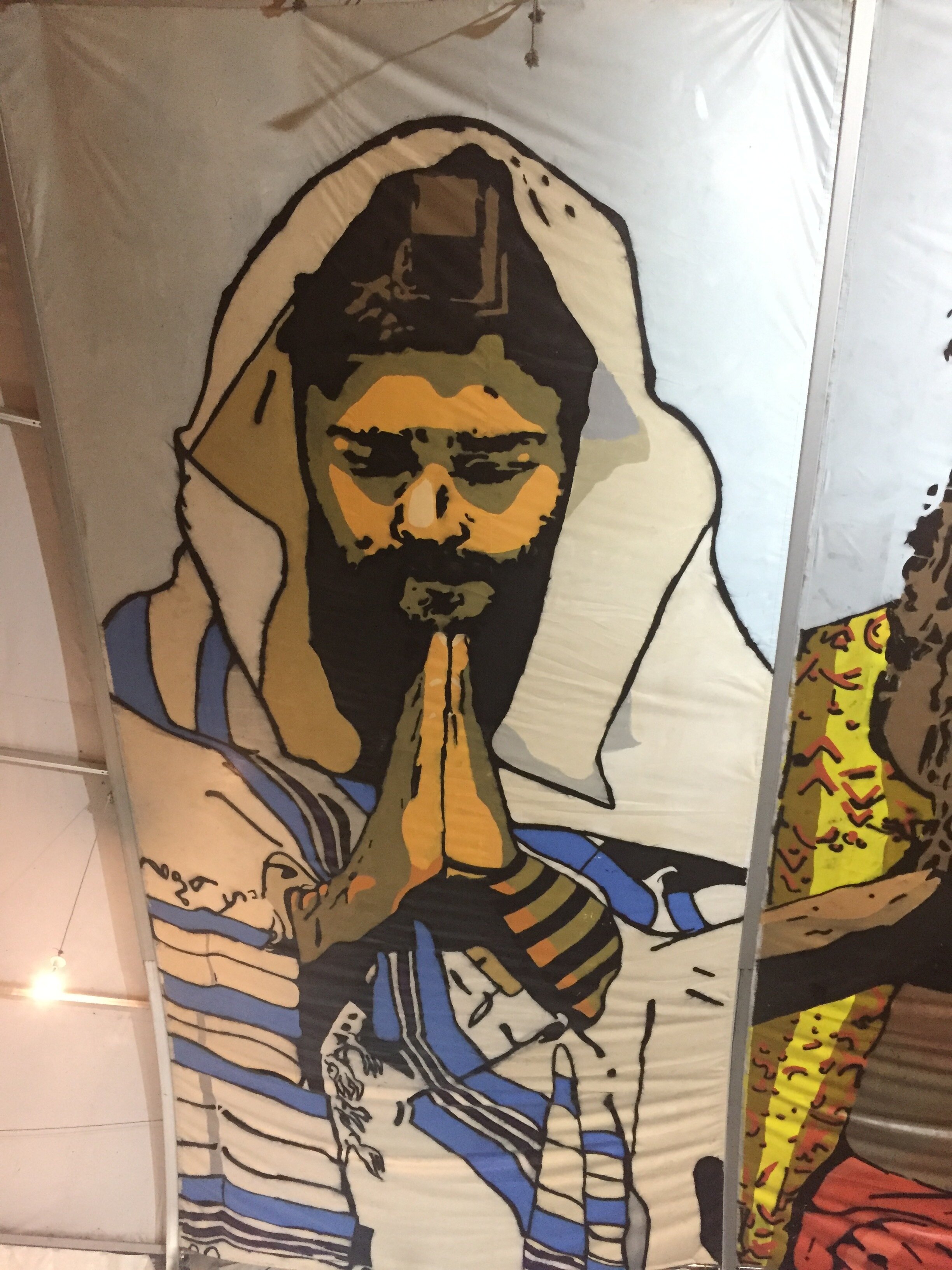
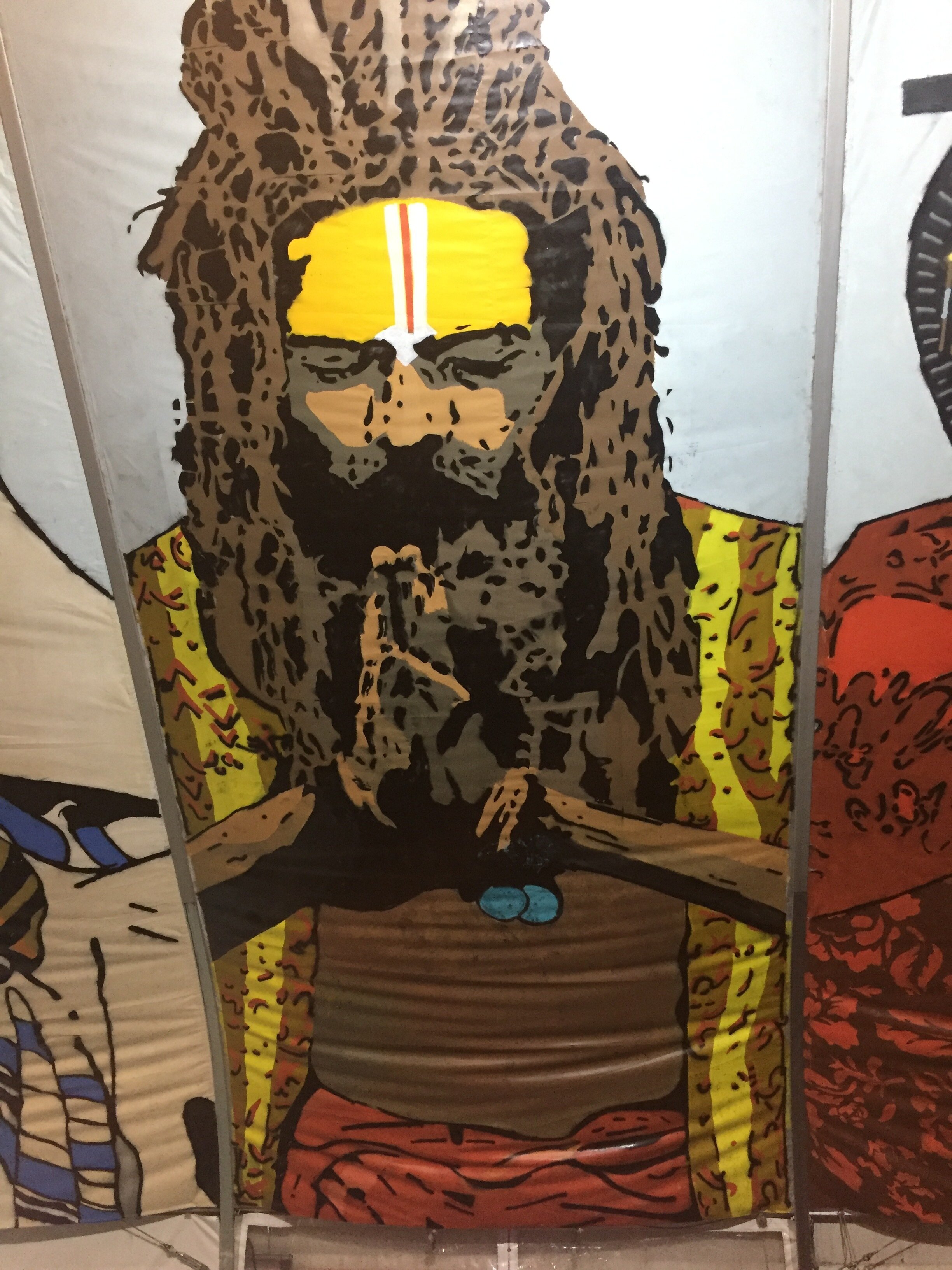
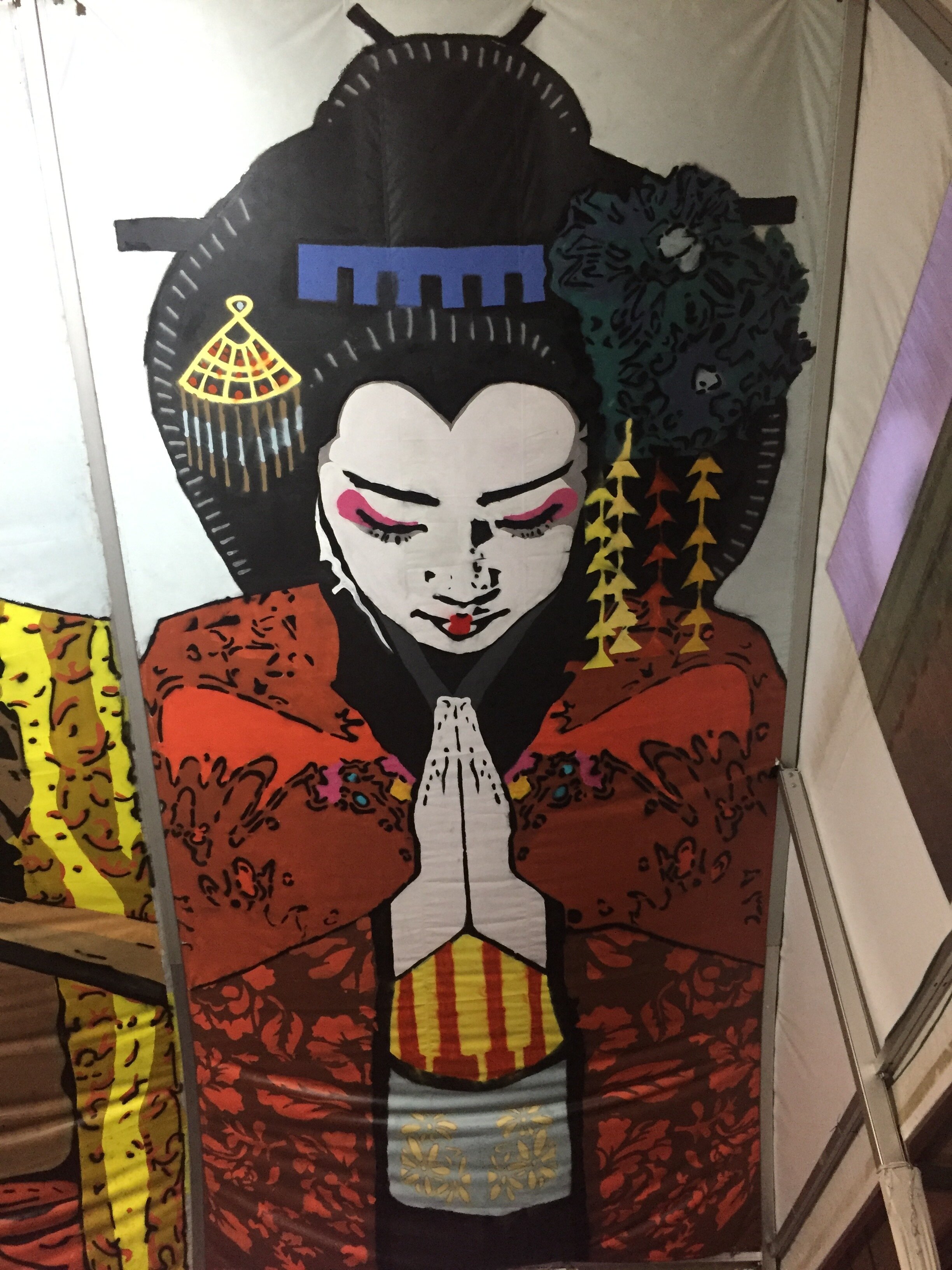
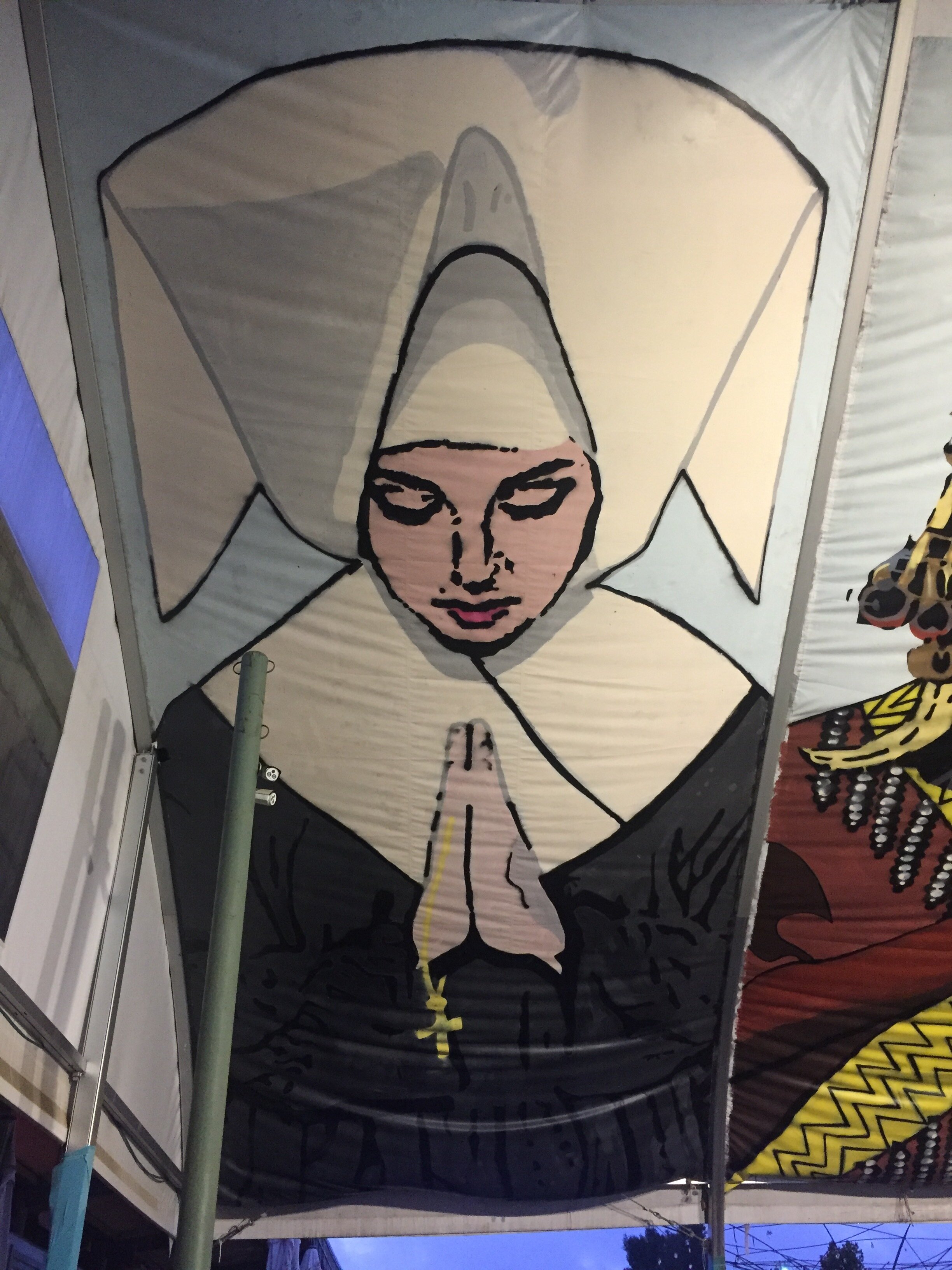
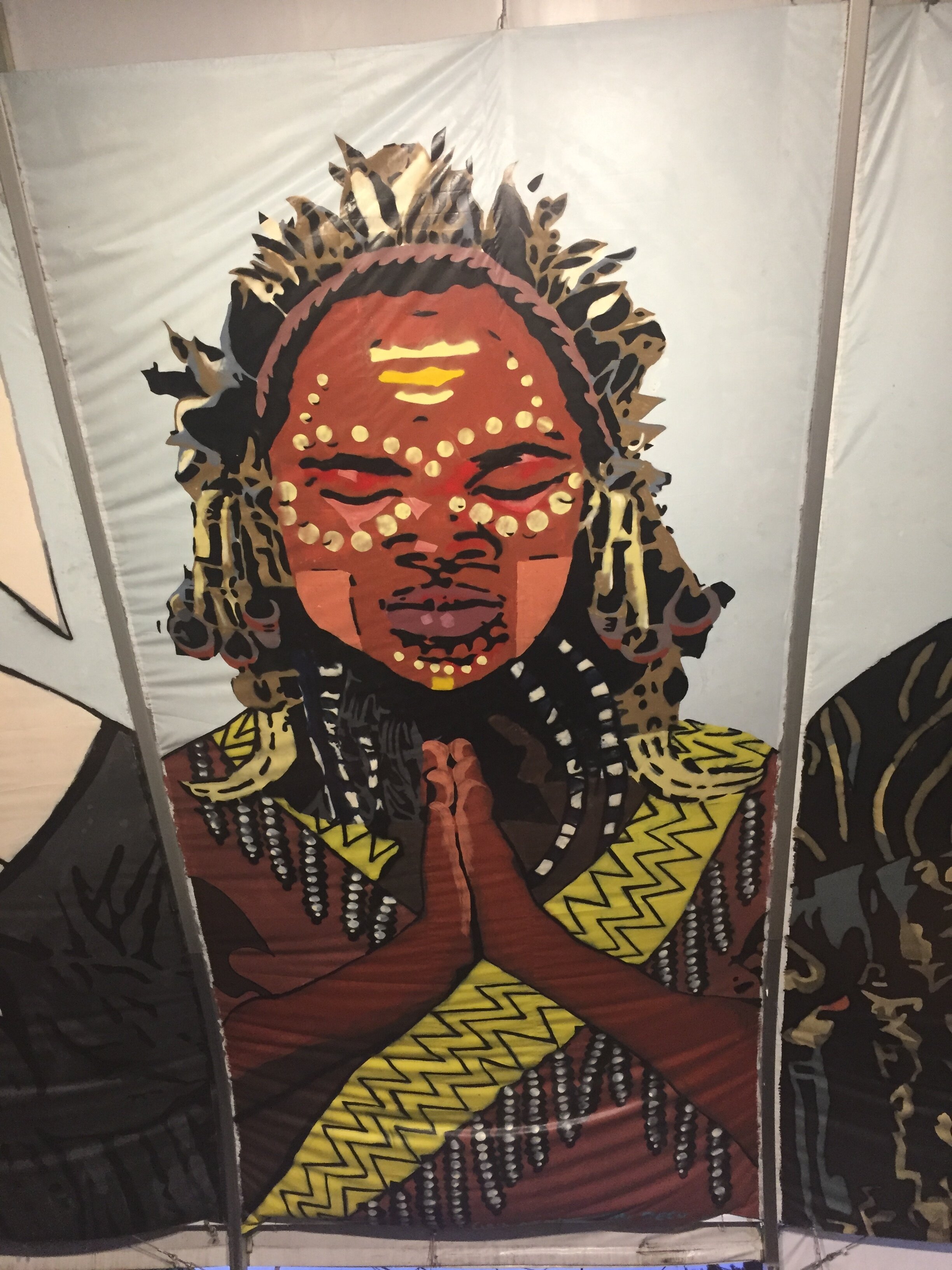
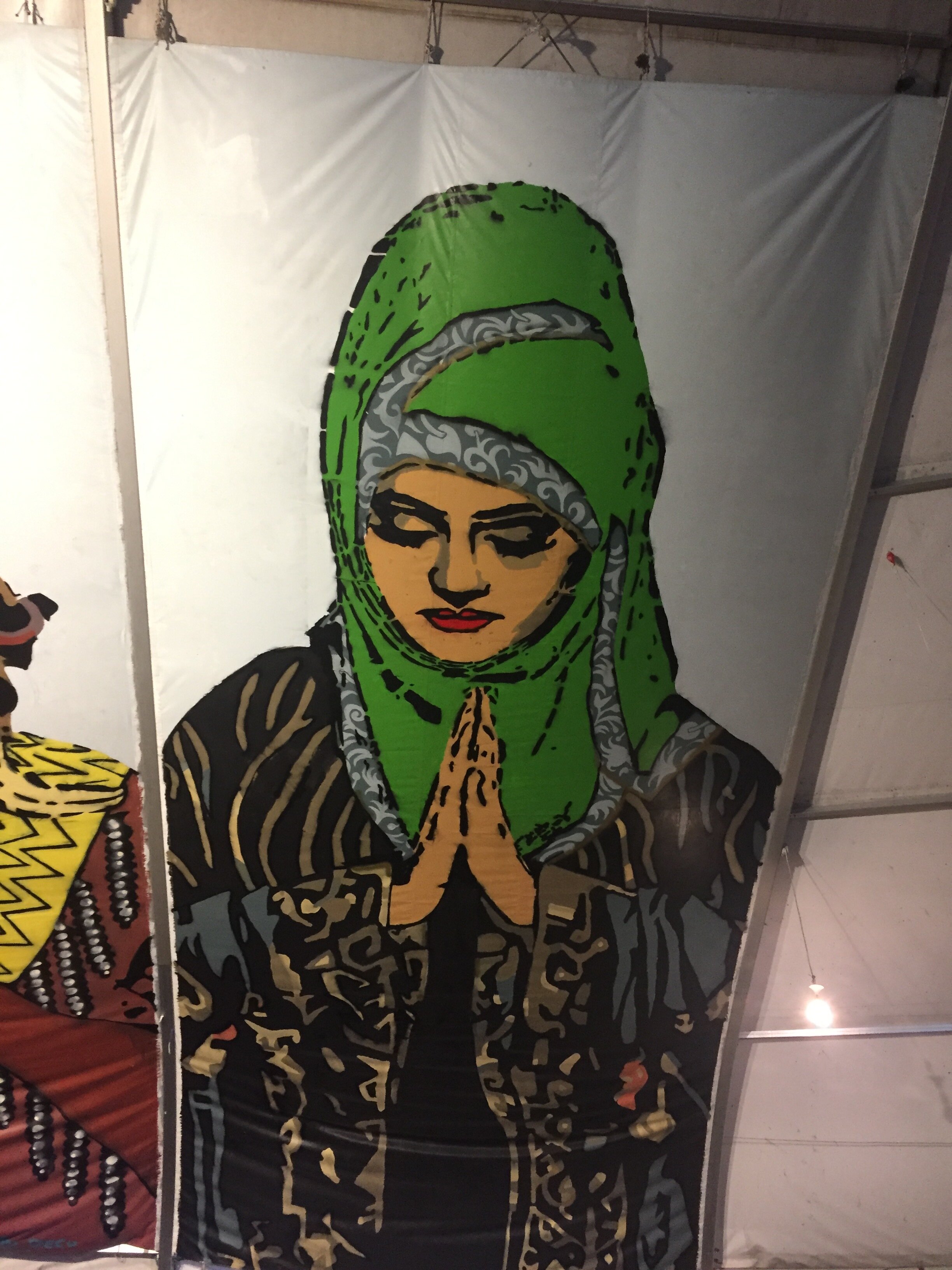
The Lord’s instructions to the Babylonian exiles was to plant gardens, build homes, and marry off their children. They were to become part of the fabric of Babylon. It was there, as members of the city, that the Jewish community developed synagogues. It was there that they developed new cultural rhythms that would mark them as God’s people. When Jeremiah, on behalf of the Lord, writes, “I will gather you from all the nations and places where I have banished you, and will bring you back to the place from which I carried you into exile” (Jer. 29:14), he is hinting that Israel would be a land of diverse experiences with a new Israeli community that now includes cultural expressions from nations abroad. Indeed, this is seen today. In Jerusalem, near the old city, there is a series of banners along a popular bike/walk path that display people from many ethnic groups in a prayer position. The text below the banners reads, “One of the most important visions for the city of Jerusalem is its existence as a cultural and religious center for all peoples.” The banner then quotes another prophet, “for my house will be called a house of prayer for all nations” (Isaiah 56:7).

Jesus was born a Jewish man in Israel while it was under Roman rule. His experience, his cultural context, included yet another mestizaje where Roman culture played a significant role. As the new Moses, He accomplished the greatest exodus of all, and through His death and resurrection, those who follow Him are part of the greatest mixed multitude to be saved from slavery. He is fulfilling that promise written by Jeremiah and more. There is one final theological contribution from the Exodus story. Peter Enns comments that the Exodus pattern is closely aligned to the new creation theme. According to Enns, “to redeem is to re-create.”[5] God, in recreating a people of a mixed identity, is now calling them to care for and develop a culture that reflects the world as He intended it. This is the subject of the final part in this series. For now, may we live in Babylon as one beautiful display of God’s unifying love for all people. Together, we are His holy nation, His Church.


Footnotes

[1] Ronald S. Hendel, “The Exodus in biblical memory,” Journal of Biblical Literature 120, no. 4 (2001) 601 [601-622].

[2] Otto Alfred Piper, “Unchanging promises: Exodus in the New Testament,” Interpretation 11, no. 1 (January 1, 1957) 4 [3-22].

[3] Wright, Simply Christian, 125.

[4] Wright, Justification, 136. See also pg. 157-158 point 4, where Wright argues the Exodus slavery language is part of the summary of Paul’s theology

[5] Enns, New Exodus, 216.

Somos Todos Juan Diego (We Are All Juan Diego)

Juan Diego.png

I was never a Roman Catholic. I only remember a handful of experiences in a Roman Catholic church, all for the baptism or confirmation of friends. As with most Puerto Ricans I know, my faith heritage was Pentecostal-Protestantism.  We were the legacy of Azusa street. Evangelists like Nicky Cruz and Yiye Avila were the heroes of my father. My abuelo was there in New York standing precisely on the corner where David Wilkerson first preached the gospel while balanced on a fire hydrant. These were the legends passed on to me with pride and faith. They shaped more than my beliefs; they shaped my identity. I associated the boldness of these preachers with being Puerto Rican. As a theology professor, I continue to discover other treasures I inherited, women and men like Elizabeth Conde-Frazier and Orlando Costas. These now sit among the many European, African, and Middle Eastern believers from church history that form the cloud of witnesses surrounding me. Yet, among all these greats, the legend of Juan Diego now stands out as one I failed to appreciate rightly.

Mexican hermanos y hermanas will know immediately the story of Juan Diego, but for many Christians, particularly protestants, he is an unfamiliar witness. Today, December 12th, is a holy day for Mexicans as they remember Señor Diego and the first appearance of La Virgin in America. According to legend, ten years after Spanish colonizers took central Mexico in 1521, the apparition of Mary appeared to Juan Diego, an indigenous farmer and laborer. The brown-skinned Mary revealed herself to him on a hill which was formerly the site of an Aztec temple and sent him to the bishop to command that a church be built on that site. The bishop, of course, dismissed Juan Diego demanding proof of his encounter with Mary, the mother of God. Days later, Mary revealed herself to Juan again, providing the proof he needed in the form of her image miraculously painted on his tilma (a kind of hood), which can be seen in the Basilica of Mexico City to this day.

My experience with Latin-American students of a Roman Catholic heritage is that they now maintain a sharp boundary between their protestant faith and their catholic upbringing. They prefer to keep their distance from all things catholic because they have seen the heavy catholic influence on Latin American culture keep many Latinos from really considering a relationship with Jesus. This boundary is significantly reinforced from the other side of the fence. Many of my students tell tragic stories of their families rejecting them for their conversion to Protestantism. Since my experience of Roman Catholicism is limited, I do not have the same anxieties about rituals, legends, or holy days associated with it. I recognize that my lack of these experiences colors my view of Juan Diego, yet I see great value in honoring the truth implicit in his legend.

bernardo-ramonfaur-C4Nk1ibWRPQ-unsplash.jpg

How protestants choose to engage the legend of Juan Diego is a question of contextualization. If we move too quickly to critique the legend as pagan worship of an idol, we miss the opportunity to affirm a significant treasure hidden in the story. Juan Diego was an indigenous laborer. He was not part of what Justo Gonzalez refers to as the hierarchical church that was an arm of the Spanish power. That church had no place for Juan Diego, nor did it preach a message of hope and life for people like him. The astounding twist of Diego’s story is that he was sent to speak a revealed word to the bishop. “Thus the Virgin of Guadalupe became a symbol of the affirmation of the Indian over against the Spanish, of the unlearned over against the learned, of the oppressed over against the oppressor.”[1]

The story of the appearance of Mary to Juan Diego brought millions of Mexicans to the catholic church. Laura G. Gutierrez of the University of Texas at Austin’s Department of Mexican American and Latina/o Studies says, “The fact that Our Lady of Guadalupe appeared as a brown-skinned woman speaking Nahuatl to an indigenous peasant is an important part of the narrative.”[2] The power is in the details. Mary appears with a sash around her waist, indicating she is pregnant. She is brown-skinned and speaks with one of the people in their language. She meets Juan Diego on a familiar worship site, making clear to him that he is encountering the divine. As Father Johann Roten, director of research, art, and special projects at the University of Dayton said, “You don’t have to be Catholic to respond to the affirmation, affection, and security that she offers. These are central values that go all the way back to the first appearance of the apparition.”[3]

As I consider the legend of Juan Diego today, I think it is important to affirm the truth therein that God is indeed a God for the weak. I do not worship Mary, yet this story of her revelation echoes a truth about Jesus. God made Himself knowable by taking on human flesh. He is a Jewish man from Israel. Luke, one of the writers of the gospels, emphasizes that Jesus’ arrival turns the world upside down. The first to hear of His birth are lowly shepherds like Juan Diego. Repeatedly in his account of Jesus’ life, Luke shows Jesus as concerned for the religiously hated, the unclean, and the despised. He did more than spend time with the Diegos of the ancient world, Jesus took their place, becoming despised that they might have new life. On a hill, like the Mary of this legend, Jesus reveals the love of God for the lowly. His story gives shape to Juan Diego’s legend by providing the central themes that resonate so deeply with the Mexican identity. Others have recontextualized the legend of Mary. All these retellings recognize the inherent beauty of a God who reveals Himself in recognizable ways to a poor people in need of His rescue. Somos todos Juan Diego. We are all Juan Diego.


Footnotes

[1] Justo L. González, Mañana: Christian Theology from a Hispanic Perspective, Reprint edition edition (Nashville: Abingdon Press, 1990), p. 61.

[2] “‘Our Lady Signifies a Lot’: Here’s Why We Celebrate the Virgin of Guadalupe on Dec. 12th,” NBC News, accessed December 11, 2019, https://www.nbcnews.com/news/latino/do-you-know-about-our-lady-guadalupe-here-s-why-n828391.

[3] “‘Our Lady Signifies a Lot.’”

Is God Really Hiding In The Woods? Reflections on Urban Spirituality

thom-holmes-ojZhAqVhHx0-unsplash.jpg
What man has not encountered, he has not yet destroyed.”
— Wendell Berry

In two short weeks Christmas films will release in mass. Husbands, boyfriends, and fathers will grimace, or secretly join in, while their wives and girlfriends, daughters and grandmothers turn to the Hallmark channel while decorating for the holidays. A timeless plot will follow; a big city business girl gets stranded in a small town and finds faith (and a handsome man in plaid), all before Christmas Eve. Disillusioned by life in the city, the main character will inadvertently experience a life pause. Her pause will take place, of course, in front of a snow-capped mountain, or along a reclusive shoreline, where she finds herself and God. This pivotal moment in nature becomes the climax, which restores the heroine’s hope in humanity and ultimately opens her heart to love. It is a story we know well, because many of us have experienced the same sense of restoration outdoors.

When feeling lost and needing to refocus, our culture, both in and outside the church, sends us to the woods. In the popular memoir turned movie, Wild, Cheryl Strayed’s wilderness journey is one of personal and spiritual transformation. The Secret Life of Walter Mitty shows Ben Stiller’s character Walter traveling to the furthest corners of the world in the pursuit of the meaning of life. Moses found his calling while on a mountain herding sheep. Christ himself prepared for ministry through the testing of isolation in the wilds of Israel. Today, countless of adults and children seek to find God in nature. Churches, rural, suburban, and urban alike, plan getaways to lakeside retreat centers. Young adults take journeys by hiking or biking across countries or continents, Instagraming their way with deep, spiritual reflections on encountering God. In pursuing these experiences, few stop to question the practical theology implicit in this means of experiencing God’s presence. If pivotal spiritual experiences happen in the woods, where does that leave God’s people when they find themselves dwelling among the sidewalks?

jake-ingle-0Ocu6Mj76L0-unsplash.jpg

If we reframed this question to ask: “Does location matter when seeking to experience God,” I believe most would answer, in the most general sense, no. One can experience profound moments with the Lord when driving to work, as when in Sunday worship, as when vacationing in the Rockies. The ability to acknowledge this is rooted in a correct theology of the person of the Holy Spirit, whom indwells believers, testifying to their union with Christ, and therefore God the Father.[1] Yet, a prevailing sense within church culture (and the world) is that God is found in the quiet, open space, and therefore, outside the city limits. I remember feeling this way when I moved to Chicago. Coming from a valley with rolling hills and broad mountains, I grew to adulthood accustomed to the security and vastness of something other than and greater than myself. After moving to Chicagoland, I frequently sought out the openness of Lake Michigan when disoriented and desiring the presence of God.

In his doctoral dissertation with Liberty Theological Seminary, Philip Joseph Parker examines on a closer level why and how people encounter God through His creation. Parker defines encounter as: “an awareness of being in the presence of someone else whether that individual is another human being or God. This includes those experiences in which there is a sensory interchange involving, for example, hearing and seeing, as well as those instances in which a person is simply aware of another’s presence.”[2] Parker correctly explains that people often have a greater awareness of God in nature; the sights and sounds provide a kind of sensory experience of His presence and work in the world.[3]

sawyer-bengtson-hBb_swGRCe4-unsplash.jpg

Does it follow that these encounters with God are not happening within the city? In contrast to nature cities are an engine that incubate and intensify the production of human culture.[4] What we encounter in more densely populated areas is not a lack of the presence of God, but the intensity of the human spirit and what it creates. This intensity is alluring, drawing many to dwell in cities, seeking after the energy which drives the activity. This intensity is also, in the broad sense, human-driven activity, which overtime exhausts the human spirit. The answer then, for many, is to withdraw from the populated setting to a setting perceived to be more God-driven, more untouched by human enterprise. So we step outside of the activity, the hurry if you will, and the spirit of humanity, to breathe and listen to a voice beyond the echo of our own.

This desire to step away and reconnect with God is a healthy one. We are reminded of this as the psalmist laments the condition of the world and comes to a clearer understanding when he “came into the sanctuary of God.”[5] We see another example in Christ who removed himself from the crowds to pray to the Father. This concept of hurry and rest is also currently being addressed in evangelical writings. John Mark Comer’s recent book, The Ruthless Elimination of Hurry speaks to just that. Comer, along with countless other Bible teachers and theologians, are tapping into the exhaustion and distracted nature of the human spirit in today’s world. However, an issue arises when a change of locality becomes an essential pattern to spiritual refreshment, a lens by which we view the working of the Spirit in ourselves and in His people. In the development of the doctrine of retreat, I wonder, have we have forgotten the point is to pause?

I propose that we have for too long focused on the location and space of our encounters with God, rather than the heart posture which facilitates these occurrences. The problem then, is not our locality, but our willingness to stop and humbly open our eyes to see the greatness and goodness of the One who is other than us. Cities display a kind of intricate beauty and tragedy that the natural world—mountains, rivers and plains, cannot. While nature, a creation of God, reminds us of His character, cities express God’s very image. Both in humanity and in the work of humanity, the image of God is showcased every moment. Sadly this showcase, a living stage play of God Himself, is flawed—often quite ugly, violent, tired, and tearful. It is no wonder that it is said of Abraham that “he was looking forward to the city…whose designer and builder is God.”[6] This is why we, as the Church, look forward hopeful and sure. Eager to take part in the restoration of all things, we live now with creative hands, active minds, and interested hearts, ready to join in God’s work of making culture.

World Outspoken exists to equip the Church to make culture. We as God’s people embody the redeemed human spirit on earth, adding to the intensity a holiness which creates a new kind of beauty, a fresh form of flourishing. In attempting to retreat from humanity, are we diverting our eyes from God’s presence around us each day on the sidewalks?

Just last week something made me look up. Sitting crouched over my phone, headphones blaring on a bursting rush hour train, I lifted my head to see the lights. As I gazed out over the Chicago river and took in the sparkling skyline of the city, my heart paused. If anyone had been watching, they may have been puzzled by the sudden smile which filled my face. In that moment the noise of the world quieted, along with my cares and uncertainties. Surrounded by the complexity of God’s creation (mankind), looking out at something bigger than myself (high-rises), my heart rested, humbled by the greatness and goodness of God. This spiritual refreshment, available to us consistently through the presence of the Spirit, merely awaits our attention and willingness. I am here to say, that even without a mountain, God can be found.

Emily_Fall_2019.jpg

About Emily C. Alexander

A first generation college graduate of a rural working class family, Emily C. Alexander recently completed her undergraduate degree in Ministry to Women at the Moody Bible Institute. Emily lives in Chicago where she enjoys long walks admiring architecture and pondering theological and sociological issues. Her hope is to impact the lives of women and the flourishing of the church through thoughtful theological engagement.


Footnotes

[1] Romans 8.14-17.

[2] Encountering God Through Creation https://core.ac.uk/download/pdf/58821668.pdf

[3] Due to the space and scope of this article, how unbelievers experience God in relation to creation will not be addressed.

[4] https://worldoutspoken.com/idea/babylon-by-choice/

[5] Ps. 73.17; Here, the psalmist doesn’t leave the city; he steps into the heart of it. The temple had significant garden imagery, reflecting an echo of the Garden of Eden (see Bible Project Video). This should challenge us about the importance of making beautiful church buildings that reverberate with a different voice, the voice of the Lord and His cloud of witnesses that went before us.

[6] Hebrews 11.10

En La Sala and All Along the Way

jillian-kim-C6ezvd-s0Fo-unsplash.jpg

En La Sala and All Along the Way

Welcoming the Next Generation into Faith Through Storytelling

See, a long time ago, there was this family.”
— Miguel Rivera, Coco

Family always begins with a story. Grandma, eyes shining, recounts how Grandpa made a fool of himself asking her out. Dad remembers how hard life was that first year in America. Auntie laughs at the mistakes she made the time she changed the rice recipe. While cultural artifacts—a photograph, blanket, or dish—spark the telling of a story, the words themselves, repeated by a loved one, trace familial origins and teach values. The act of remembrance through story—an often unidentified ritual—binds subsequent generations together in shared experience.

cristian-newman-fy_9H6X4A3E-unsplash.jpg

Disney Pixar’s 2017 film Coco begins with the story of a family. A happy, music-loving family forever altered when the beloved Papa never returns home with his guitar. Miguel, a young boy and the protagonist of the film, cannot change the fact that his great-grandfather abandoned the Rivera family for a music career, leaving his great-grandmother to survive by starting a shoe business. Though extreme, we are not surprised to learn that the Rivera family now hates music, a fact often repeated as a concluding value of the family story and highlighted alongside great-grandmother’s resiliency. As the evening of El Día de los Muertos (The Day of the Dead) commences, the story of the Rivera family comes alive for Miguel, as he enters the world of the dead in search of not only his family, but validation of the values passed down to him. Miguel’s journey is one of remembrance, which solidifies his identity as a Rivera.

Storytelling is something the Latino community does well. Chicago native Jose Gonzalez highlighted this in his standup production series this summer entitled, “La Sala: Cuentos from the Latino Living Room.” Bianca Sanchez, in her Chicago Tribune article, shares the significance of story and poetry in Gonzales’ upbringing, taking place in the living room or on the front porch, as his Nicaraguan immigrant father shared Bible passages, parables, and stories of the past. Gonzalez expressed that key to his production was: “that feel, that ambience, that you are actually at home in la sala (the living room), just listening to stories and tales as if they were from your mom, your dad, your uncle or your aunt.”[1] Familial stories and proverbs, of tragedy, hope, humor, and lessons learned, serve as a means of teaching core family values from one generation to the next. The social capital of character, faith, and loyalty extend outward from the family to the community in which they reside. Yet, as Sanchez emphasizes in conclusion, “before being told outside the home [stories] are first shared in la sala.”[2]

Storytellers Carmen Agra Deedy and Karla Campillo-Soto concur on the impact of storytelling in Latino families and the Hispanic community at large. In their interview with Stephen Winick of the American Folklife Center of the Library of Congress, Deedy and Campillo-Soto share stories from their Cuban and Mexican upbringings, including immigration and transition to the United States. As storytellers, Winick points out that these Latinas choose to focus on family stories. Deedy explains: “It’s so cultural for us, you know, the [sic] everything begins at home. And the most tragic story you could ever read, write, sing about, would be about the child who has no home. Inevitably my stories weave back to home.”[3] Storytelling is by no means specific to Hispanic families and communities, but in every family, Deedy explains, there is a storyteller. These individuals carry on the remembrance of the past, welcoming the younger generation into a living example of that which the family holds dear.

kelly-sikkema-FqqaJI9OxMI-unsplash.jpg

Storytelling takes on new meaning for God’s people when looking at the development and furtherance of faith in the Old Testament. Standing on the border of the land of promise, after forty years of waste and wandering, Moses looked out at a people marked by the choices and stories of their parents and spoke these words:

Only take care, and keep your soul diligently, lest you forget the things that your eyes have seen, and lest they depart from your heart all the days of your life. Make them known to your children and your children's children— how on the day that you stood before the Lord your God at Horeb… he declared to you his covenant, which he commanded you to perform, that is, the Ten Commandments, and he wrote them on two tablets of stone."[4]

God gave his people a commandment of remembrance—by recounting the stories of the past, they would invite the next generation into the continual and living story of obedience to God’s faithful love. Further instruction was given in Deuteronomy chapter six, explaining that in all of life, while sitting in la sala, while walking along the way, when going to bed and rising in the morning, parents are to teach their children the words of the Lord, with the intent of the multiplication of God’s people in the land.

priscilla-du-preez--mCXEsLd2sU-unsplash.jpg

And so, Jesus too delivered a command of remembrance. This command is lived out weekly as we, the Church, gather to break bread and sip wine. These physical elements of communion, like blankets and photographs, recipes and furniture, prompt the telling of the story of our faith. We remember both the physical body of the incarnate Christ, broken to allow all people into the living story of God and our personal stories of redemption. It was during this moment in a recent church service that I watched a mother give her daughter the bread and juice. Jessie is only six, but her thoughts in children’s church display an inner understanding of the gospel, as she retells the truths she learns at home when talking and praying with her mom and grandmother. Jessie is the youngest generation of the Church, being welcomed into the living story of the gospel through her mother’s faith and faithful storytelling.

On October 31st El Día de los Muertos will commence and many Mexican families will leave photos of their loved ones on the ofrenda.. On November 28th, American families will gather to give thanks, remembering the goodness of the year with food, laughter, and football. Memories will be relived, stories told. These special days are known for storytelling. But so is today. While cooking dinner or driving to soccer practice, God has given parents and grandparents the unique opportunity to welcome their children into the shared experience of a living faith. A hospital bracelet becomes a reminder of a story of God’s healing. An old journal or sketchbook an opportunity to retell a critical moment in your faith journey. Driving by my mom’s first apartment this summer, prompted her to share the powerful impact of Christian community in her life as a young adult with no believing family. A story I resonate with, living far from my own family support system. Her story welcomed me into the journey of faith we both share. Just as the elements of communion remind the older generation of the faithful love of God, let them be the spark for the words, the stories of His provision, an honest recounting of the challenges of walking in obedience. So then, as the youngest of the Church step out of the security of la sala, they will know who they are—members of the family of God.

Emily_Fall_2019.jpg

About Emily C. Alexander

A first generation college graduate of a rural working class family, Emily C. Alexander recently completed her undergraduate degree in Ministry to Women at the Moody Bible Institute. Emily lives in Chicago where she enjoys long walks admiring architecture and pondering theological and sociological issues. Her hope is to impact the lives of women and the flourishing of the church through thoughtful theological engagement.


Footnotes

[1] Sanchez

[2] Sanchez

[3] Latina Storyteller Oral History, Library of Congress

[4] Deuteronomy 4.9, 10b, 14.

What Latin Hospitality Taught Me About the Gospel

yellow-concrete-house-2102587.jpg

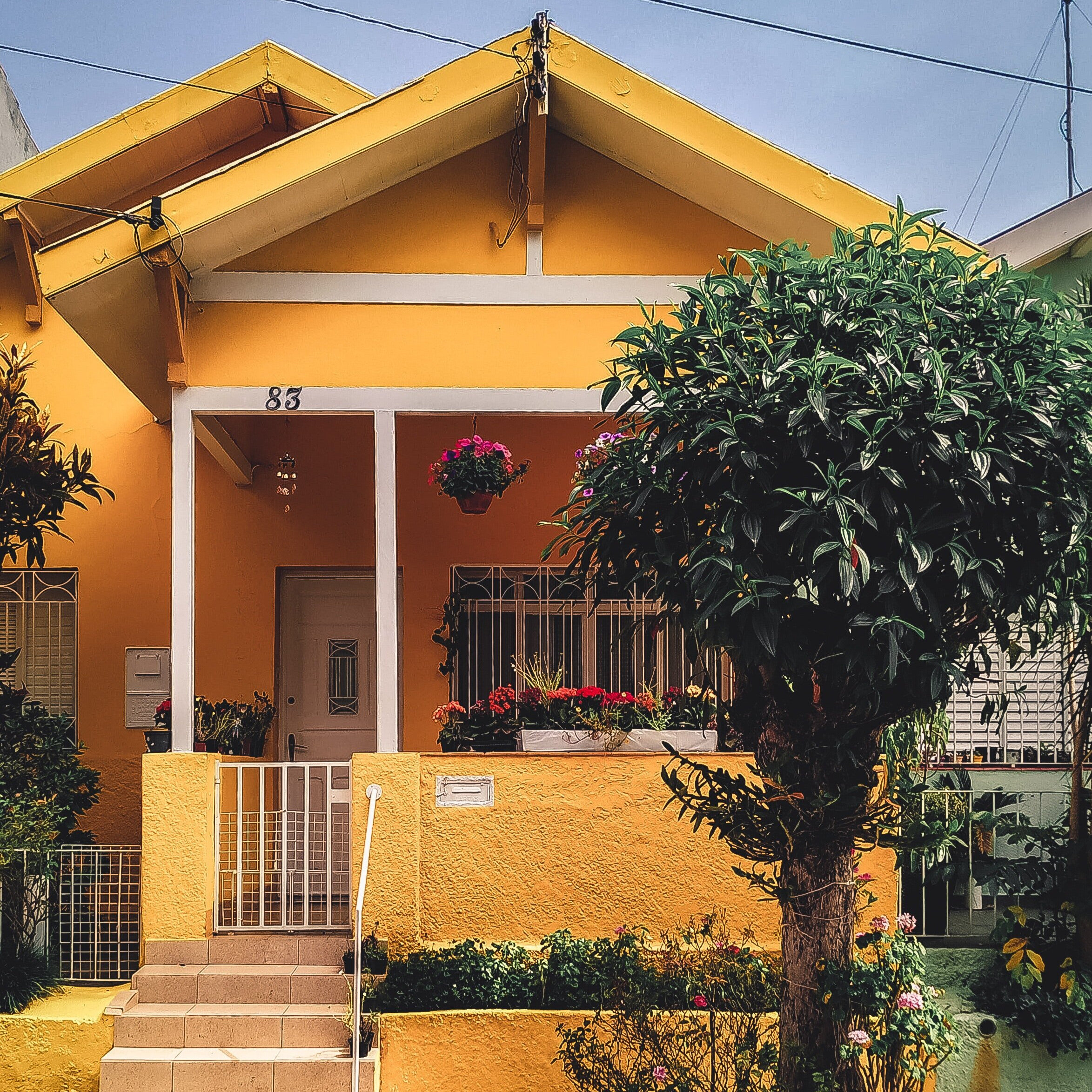
Mid-stride, I noticed his home. It was out of place. No wait, the porch was out of place. This summer I lived at a busy intersection dividing Chicago’s Wicker and Humboldt Park neighborhoods. Directly on my running route through Wicker, I discovered an older gentleman who consistently sat on the patio extending beyond the tiny porch of his home. Even when his chair was vacant, the front door hung open and a water glass sat at the table waiting for his return or the arrival of a friend. It is not that Wicker Park lacks beautiful porches, it is that this gentleman’s porch is a flavor that one would typically connect to Humboldt Park—spilling into the street, extending a vibrant welcome punctuated by unconventional paint selection, flowers, statues and flags. This porch speaks of warm, Latin hospitality.

In a technology-driven era with decreasing face to face connection, the western church has recently emphasized the concept of biblical hospitality. A brief online search leads to articles and blogposts, lamenting the loss of in-home hosting and after church lunches around the kitchen table. In 2018, author and speaker Rosaria Butterfield furthered the discussion with her book, The Gospel Comes with a House Key: Practicing Radically Ordinary Hospitality in Our Post-Christian World. Butterfield calls the church to a lifestyle of hospitality as a principle means of welcoming the lost into the gospel of Christ. House church movements, such as Legacy Christian Fellowship in Chicago, are an increasing church plant model in urban areas, making church accessible to those who may not set foot in a church building. As the church seeks to live out biblical hospitality for the growth of the Kingdom of God, a valuable lesson can be learned from the front porches of the Latino community.

Urban planner and community activist, James Rojas, is a pioneer and leading thinker in “Latino urbanism” and Latin placemaking in America’s neighborhoods. Immigrating to neighborhoods planned, zoned, and built for the ambitions and lifestyle of the American working and middle-class, Rojas explains that Latinos bring into America’s neighborhoods their own view of land, people, and place.[1] Rojas calls this the “Latino vernacular.” This vernacular is not only a synthesis of cultural styles from a variety of home countries, but a visual expression of the very values and experiences of both the individual and the immigrant community as a whole.[2] Latino vernacular is not merely an architectural distinction[3], as seen in the Wicker Park patio I ran past each morning this summer. Architecturally, the build of this home and space was like every other house on its block. However, the resident chose to utilize the space in a distinct way, implementing an entirely different placemaking method than his neighbors, setting his patio apart from the remainder of the street.

Greek Lady.jpg

The front porch of a home provides the division of the public and private spheres, keeping the home distinct from the public space, the street, on which it resides. Rojas explains that the typical American home is constructed in a linear progression of the public to the private: street to porch, living room to kitchen, and then the backyard.[4] Many American communities may remember a day when the front porch was utilized more frequently as a place of interaction: greeting neighbors, chatting with a date before saying goodnight, or sharing a piece of pie with a friend who stopped in. While graced with beautiful planters, lights, and the occasional bike, today the rocking chairs on the porches in my neighborhood sit empty, while lights flicker from the show streaming in the living room or smoke rises from the grill out back. This transitional space, the front porch, remains un-utilized.

Not so in Latino urbanism. Coming from cultures which operate around a plaza, Hispanic communities value and utilize the front porch and space in front of a home, creating a place where the public and private collide.[5] The porch becomes a happening place, where the resident interacts and engages with the community. Rojas explains: “The front porch is where Latinos become civic-minded and bond with their neighbors.”[6] It is bringing the warmth and care of home to the community in which one lives. Lynda Lopez, Chicago resident and reporter for StreetsBlog Chicago has seen the impact of Latino placemaking in her own Chicago neighborhood, Little Village. In her June 18th post entitled, “How Latinx Chicagoans Remake Public Space,” she shares how the corners and stoops of Little Village remind her of sitting in front of her grandmother’s house in Michoacán, Mexico. While walking through her neighborhood, Lopez sees the concept Rojas calls “social cohesion” at play.[7] The community, in extending their homes to the front of the house, take increasing ownership of the streets and corners as well. The household, now extended forward into public space by the utilization of the front porch, is thrust into consistent, intentional, and caring interactions with the community.

Plaza.jpg

The interaction of the public and private which Rojas defines in Latino urbanism provides a challenge to the church, offering a means for us to grow in our understanding and living out of the gospel. The gospel itself exemplifies the collision of the public and private. Through the incarnation of Jesus Christ, the sacredness of the Godhead became accessible to the community of mankind. In Ephesians, this access to the trinitarian relationship is directly related to becoming a part of the household of God.[8] Could the current trend towards biblical hospitality be the church realizing its need to be and act as the spiritual home it truly is? If so, our porch needs a little Latin placemaking.

Welcoming the outsider into the sacredness of the home can be a challenge for individuals and communities of any culture. But the church can’t take a pass on this one. Christ has mandated a going forth of believers and a welcoming in to those who are outside the family of God. After spending this summer observing the porches of many Chicago homes, I realized the church is, or at least should be like, the Latino front porch. This is what we ontologically are in Christ—a collision of divinity with sinful humanity. We are the welcoming porch, a bit out of place on our block, offering a long talk and glass of water rather than gathering in the back yard by ourselves with the BBQ. When we operate this way, we become consistently and intentionally committed to our communities, civic minded—aware of its needs—but spiritually minded too, always desiring to welcome our neighbors in for a full meal around the table of God.

As National Hispanic Heritage Month begins this week, my thoughts are driven to the many ways my Latino and Hispanic brothers and sisters have challenged by thinking with fresh perspectives of the church and the gospel. As ministry leaders and faithful Christians, let us celebrate the beauty of theology set within our various cultural expressions. As a white ministry leader, it is my desire to grow personally as I partner with my Latino family in the sharing of the gospel, implementing their unique strengths alongside my own, so that the fullest picture of the Body of Christ can be expressed in our communities.

Emily_Fall_2019.jpg

About Emily C. Alexander

A first generation college graduate of a rural working class family, Emily C. Alexander recently completed her undergraduate degree in Ministry to Women at the Moody Bible Institute. Emily lives in Chicago where she enjoys long walks admiring architecture and pondering theological and sociological issues. Her hope is to impact the lives of women and the flourishing of the church through thoughtful theological engagement.


Planting in Babylon Pt. 1

01-1.jpg

We like this or that propositions. Apparently, our brains prefer them. Decisions are simplified into either/or choices. Conflicts are reduced to good vs evil. Politics, at least here in the US, are framed by a two-party system. We like these binaries. Right or left? In or out? For or against? These thinking habits help us with simple decisions, but this kind of thinking is ill-used when applied to complex problems. A friend recently told me that in his counseling practice, every person he’s worked with thus far has developed a bad binary. They oversimplify their problem into two alternatives that do not account for the nuance in their stories, and this hurts them. This tendency toward binary thinking is seen in the way many local churches treat culture, and we need to move away from it to something new if we are going to live out our calling as God’s people.

Paradise Lost or Future Heaven[1]

In the consulting we do at World Outspoken, we generally encounter two postures toward culture. Some leaders approach cultural engagement with a deep sense of loss. They think back to a golden age, either in their country or in their local congregation, where things were better or right. These leaders express a desire to return their organizations to a past version. Their memories of the “good ol’ days” are romanticized, and the people of that age become heroes/legends. “For the person whose focus is mostly on the past, the present is a cemetery filled with monuments to the glory days that will never come again or with a painful record of the injuries and slights we have suffered.”[2] These leaders need the words of the teacher: “Do not say, “Why were the old days better than these?” For it is not wise to ask such questions.”[3]

A second, equally common posture toward the present culture is to look beyond it to the future. Leaders with this mentality misapply the teacher’s words: “better is the end of a thing than its beginning.”[4] This group risks minimizing current events and borders on escapism when they focus too much on the truth that the Lord will one day make all things new and right. “To someone whose interest is chiefly on the future, the present is only a way station. Its primary function is to serve as a staging ground for what comes next.”[5] This group risks disengaging in significant ways from work that reflects the future they imagine. Rather than work toward that future, they wait passively for it. As my friend, Dr. Koessler writes, “The future and the past can both be an unhealthy refuge for those who are disappointed with their present.”[6] What we need, then, is another type of “imaginative response …  focusing neither on a past golden age nor an anticipated utopia.”[7]

erik-odiin-jbQvJx2EWnU-unsplash.jpg

The Exiled Imagination

This article is the first of a three-part series that develops an alternative response to present culture. We focus on themes drawn from Scripture’s exilic writers. Exile “is the experience of pain and suffering that results from knowledge that there is a home where one belongs, yet for the present one is unable to return there.”[8] The most iconic experience of exile in the Bible is the capture of Israel by the Assyrians (722 B.C.) and the fall of the southern kingdom of Judah to the hands of Nebuchadnezzar (586 B.C.). It was during the exile of the southern kingdom that Jeremiah penned his popular letter (i.e. Jer. 29). In this letter, we discover the first image necessary for a healthy imaginative response to culture; we discover an image of ourselves. While developing this image, my goal is to move beyond simple binaries to a robust imaginative posture that accounts for who we are and where we are today.

The first few verses of the 29th chapter of Jeremiah’s anthology sets the stage for this letter. It was written to Israelites who were taken as prisoners of war from the city of Jerusalem to Babylon. The letter begins with a simple but hard declaration from God. The Lord takes credit for their exile, for sending Israelites as POWs to a perilous city. We forget that these Israelites were not sent to Babylon as missionaries. They were not pure, innocent, and godly people who were given a special call to this dangerous and unjust place. They didn’t choose to move there. The truth, in fact, is that the Israelites were Babylonian before they ever lived in Babylon. Jeremiah makes this point repeatedly throughout his anthology.

Beginning in chapter two, we are told that the priests, the shepherds, and the prophets disobeyed God’s instructions. The entire nation’s crimes are summarized in two statements: 1) They disowned their God, and 2) replaced him with other gods (2:13). The leaders were corrupt, and the people were wayward, leading to rampant injustice (6:10; 7:5-20, 30-31). Jerusalem was the capital city, the city of God and His chosen king. It was the Lord’s special dwelling place, meant to reflect his peace, justice, and prosperity (Ps. 72), but the first 24 chapters of Jeremiah’s writings reveal a different reality. Israel never built the Jerusalem, the city which was a blueprint of Heaven on earth. Instead, they built a mirror-image of Babylon, following the plans for a city built on libido dominandi (the lust for mastery). What was ruling Babylon was in them too. God’s people were more Babylonian than they were citizens of Jerusalem, and after many warnings, they were cast out from the city of God to live in the real Babylon they lusted after.

A History of Non-innocence

The Lord sent Israelites into Babylon not as good people to a bad city, but as chastised people to a depraved city. A healthy imaginative response to our Babylonian world depends on a healthy view of ourselves. In a previous article, we discussed the Latino understanding of history. The Hispanic identity is shaped by the conviction that our heritage carries a deep sense of inherited guilt. The bible gives shape to a similar identity for God’s people (Rom. 5:12). Today, we are not beyond the guilt and crookedness of this sick world. Paul tells us as much. After listing a group of sinners that would make a kind of “top 10” list of criminals and deviants, Paul writes, “and such were some of you.”[9] The identity of God’s people is always simul justus et peccator (simultaneously righteous and sinner). Our sin tendency tethers us to Babylon. It forces us to acknowledge our complicity in Babylonizing the world. But we are also righteous.  We are washed clean only to be planted back in the world as God’s ambassadors (1 Cor. 5:20). It is with this dual identity that we are to read the instructions of Jeremiah’s letter.

The Bible gives us two examples of what it means to live well in Babylon: Daniel and Nehemiah. Both men worked in the royal court, directly engaging the political systems of the city. Both men have long prayers that are recorded for us to read, and both men confess their inherited guilt. Daniel chapter 9 records Daniel confessing the sin of all the people, declaring the shame inherited because of the corruption of all Israel. The 9th chapter of Nehemiah is very similar. In his prayer, Nehemiah recounts the history of Israel, highlighting the consistent mercy of God and the consistent failure of the people. In these men, we have examples of culture-makers who don’t pretend to be innocent when reflecting God in their present cultural home. They go before God on behalf of their collective guilt, then engage their city.

daniel-funes-fuentes-TyLw3IQALMs-unsplash.jpg

Planting in Babylon

When God chooses people to be his ambassadors on earth, He instructs them to reflect Him in what they make. Jeremiah, speaking on behalf of God, encourages the people to go back to basic culture-making. He tells them to plant gardens, build houses, and have families in Babylon. They are not supposed to spend their days dreaming of their past in Jerusalem, nor are they are to passively wait for a future rescue, refusing to enter and engage their new home. They are not going back anytime soon, and the rescue is still far out in front of them (vv. 8-9). In the present, God calls them to make culture, to create communities that live out His story in this city. They are tied to Babylon and instructed to give shape to it.

The Lord says, “Seek the peace and prosperity of the city to which I have carried you into exile. Pray to the Lord for it, because if it prospers, you too will prosper.” The italicized word here is a translation of the word shalom. “In the Bible, shalom means universal flourishing, wholeness and delight – a rich state of affairs in which natural needs are satisfied and natural gifts fruitfully employed, … Shalom, in other words, is the way the world should be.”[10] This command breaks our binary patterns of thinking. The good of God’s people is interconnected to the good of a corrupt city. This should scare us. We know, because Israel gave us an example in Jerusalem, that we can never produce shalom in the cities we make.

It is in view of this, that the Lord’s promise in the middle of this letter is so comforting. The Lord tells a non-innocent, chastised people to live in Babylon as active seekers of shalom, as those who pray for shalom and make small pockets of its beauty in their cultural works. While they work, they are told to hope and wait because their exile is not permanent. After a set time, the Lord promises to visit Babylon and bring the exiles home, back to the city where God and humanity dwell together in peace. Thankfully, He has visited. He can be found by those who seek Him, and He is gathering people from all the nations and places of exile (v. 14). This last hope – the hope that God brings people from every nation and place to His city – is the remarkable truth that we will explore in the second part of Planting in Babylon. Until then, may we be sober-minded makers who remember our sin-tendency and live in God’s grace for the shalom of Babylon.


Footnotes

[1] Credit to my friend and colleague, Dr. Baurain for these title phrases. Bradley Baurain, “By the Rivers of Babylon We Weep: The Exiled Imagination,” Christianity & the Arts, accessed July 23, 2019, link.

[2] John Koessler, “Practicing the Present,” April 22, 2019, Link.

[3] Ecclesiastes 7:10

[4] Ecclesiastes 7:8

[5] Koessler, “Practicing the Present.”

[6] Koessler.

[7] Baurain, “By the Rivers of Babylon We Weep.”

[8] I. M. Duguid, “Exile,” NDBT, 475. The author of this quote adds an * symbol to suffering that has been removed from the quote here. The symbol signals the reader to read a particular nuance he has added in a previous paragraph. By suffering, the author is referring to guilt or remorse stemming from the knowledge that the cause of exile is sin.

[9] 1 Cor. 6:10

[10] Cornelius Plantinga Jr, Not the Way It’s Supposed to Be: A Breviary of Sin (Grand Rapids, Mich. u.a.: Eerdmans, 1996), 10.

Beyond Racial Binary Pt. 2

_DSC2763.jpg

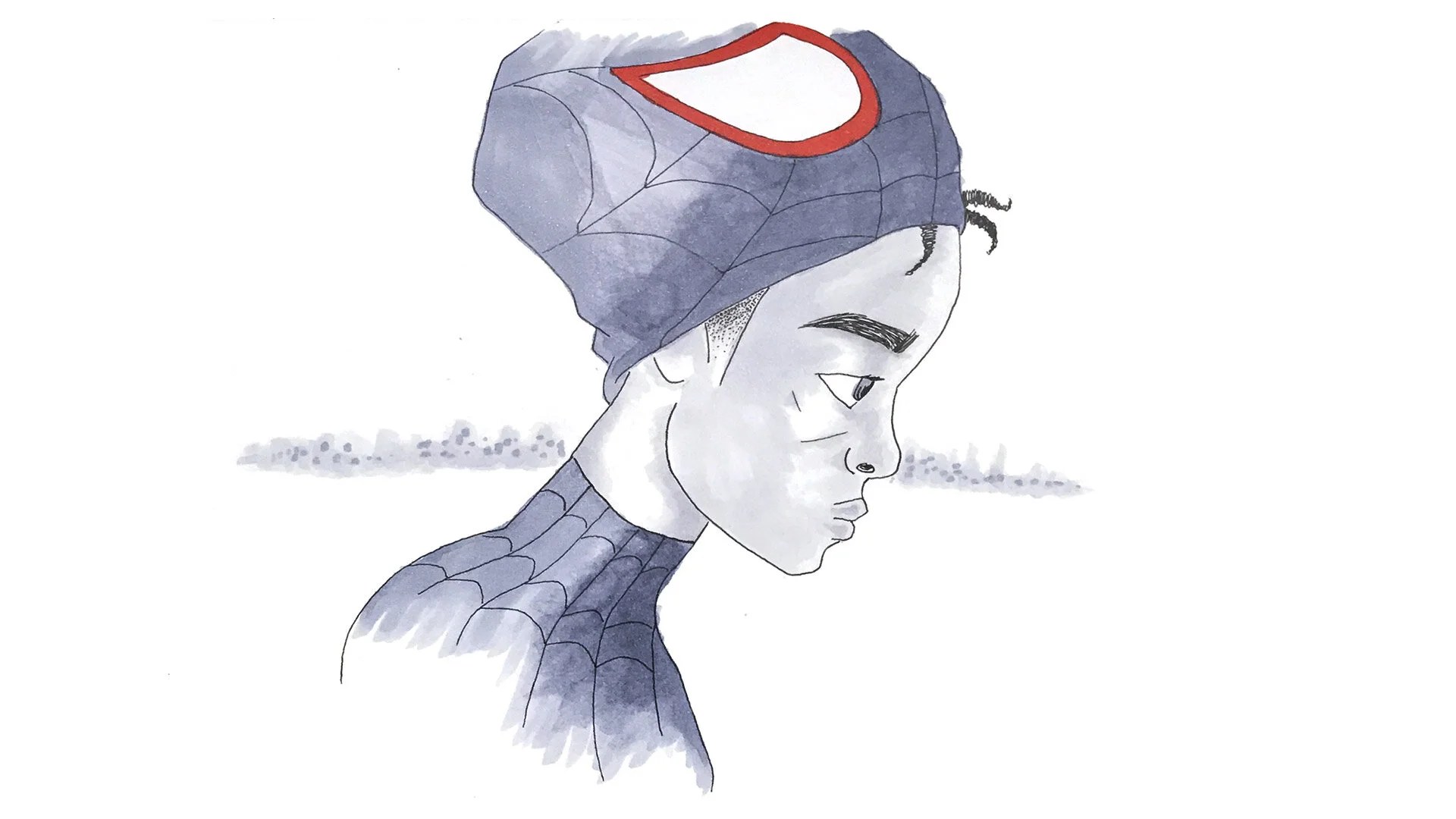
Miles Morales. That’s the name of the Spider-man at the center of the newly released Spider-man: Into the Spider-verse. He is half African American, half Puerto Rican, and the first bi-racial superhero to hit the big-screen. As a true coming-of-age story, the movie portrays Miles ascending to the idea that he too can be spider-man. This is the main theme of the film, and it’s summarized in a mid-credit title card that reads: “That person who helps others simply because it should or must be done, and because it is the right thing to do, is indeed without a doubt, a real superhero” (Stan Lee). The Spider-verse, with its many spider-people, is a forward-thinking contribution to the race conversation, one that subtly adopts a thicker identity than the binary (i.e. black/white) so common to the discussion. Miles is more than a black character. Spider-man is more than a white Peter Parker. The super-hero behind the mask is recast as a Criollo, a product of a complex racial world.

Original Artwork/Christian Perez

Original Artwork/Christian Perez

After reading our previous article on the racial binary, a reader sent me the following critique (I’ve shared it in full because it is the question at the center of this second article):

“This article proved that historical events demand a more nuanced view. Now you should take it further and explain how [a tri-racial history] will not only account for what actually happened in America but what that historical accuracy will do for discussions about race in America. So yes, the truncated [binary] starting place doesn’t account for the history of the west and south, but how will the new proposal change the discussions about our racialized history?”

Essentially, I believe this reader is asking for points of application, for the “what now” that follows from a tri-racial American identity and history. My goal is to answer his question by building from the same two points that I proposed in the original post. A tri-racial dialog on race is one that is rooted in a thick history of non-innocence and the Criollo/Mestizo Identity, and together these provide a base for reconciliation and unity. Miles Morales will serve as a contemporary case study, an example of how a history of non-innocence and a Criollo identity can shape us all for the better. While Miles serves as the social example, I intend to draw points of connection between these ideas and the Bible when appropriate. In making these connections, my aim is to show that the Church is uniquely equipped, when guided by Latino/a brothers and sisters, to be the ambassador of reconciliation in a racialized America.

A History of Non-innocence[1]

In the previous article, I briefly covered a history of racial oppression and violence in the west coast. By recounting this history, I demonstrated that the Hispanic experience in America includes acts of racism dating back further than the history used to support a racial binary. However, this more nuanced historical account is not meant to be used to lay claim on land once stolen by Americans. That is not my goal.  On the contrary, the Hispanic social identity does not permit me, nor my people, the gift of innocence when it comes to ownership claims on the land. Remember, the means by which these lands became Spanish was conquest and encomienda (see previous post), practices no more honorable than those used by Americans years later.

Hispanics are the mixed products of Spanish conquistadors and indigenous people. Our inheritance is always a mix passed down from guilty ancestors. As Justo Gonzalez remarks,

Our Spanish ancestors took the lands of our [Native] ancestors. Some of our [Native] ancestors practiced human sacrifice and cannibalism. Some of our Spanish forefathers raped our [Native] foremothers. Some of our [Native] foremothers betrayed their people in favor of the invaders. It is not a pretty story. But it is more real than the story that white settlers came to this land with pure motivations, and that any abuse of inhabitants was the exception rather than the rule. It is also a story resulting in a painful identity.[2]

A Criollo history, a mixed, tri-part history that accounts for the crimes of our ancestors and acknowledges that our inheritance is the result “not merely of hard labor, daring enterprise, and rugged individualism but also of theft” can cultivate the empathy necessary to pursue justice together.[3] This is the great gift and therefore the great responsibility of a Hispanic heritage: to challenge the myth of innocence in the American past.

Miles and his Heritage (Spoiler Alert)

One of the tensions of the Spider-verse movie is the relationship between Miles and the male figures in his family. His father, Jefferson, is a hard-nosed police officer who lives on clear cut lines of right and wrong and pushes Miles to transcend the mire of life in Brooklyn. In a powerful moment between father and son, Miles questions why he must go to the new magnet school instead of being in a traditional public school “with the people.” Jefferson’s answer is firm: He wants something better for Miles; he doesn’t want Miles to become his uncle. To this, Miles responds, “What’s wrong with uncle Aaron?”

Miles admires his uncle Aaron, who is a clear foil of Jefferson. The big reveal of the film is that Aaron is The Prowler, a murderous villain who works for the Kingpin. During a tragic scene following the revelation of Aaron’s alter-ego, Miles is encouraged by his dying uncle to do better, to be better, because he is “on his way” to greatness. Miles’s own family is complicit in the crimes, his uncle is caught up in the wrongs, yet he drives Miles to transcend as Jefferson had hoped. Miles’s hero was also a villain. This is part of his complex inheritance. This history of non-innocence undergirds Miles’s embrace of his call to be Spider-man. In the end, we see Miles paint a tribute to his uncle in the police station with his father, a beautiful act of remembrance.

alex-iby-430576-unsplash.jpeg

A History of Non-innocence and the Church

The way we capture and relate history affects the way we perceive the world and the Bible. This is one of the basic claims of Justo Gonzalez’s book, Mañana: Christian Theology from a Hispanic Perspective. Justo demonstrates that Bible stories are not politically and socially neutral, and he convincingly argues that American retellings of biblical stories tend to sterilize them and remove these aspects. However, a slow examination of the Older and Newer Testament would prove to be quite contrary to this mostly innocent account of the stories. The history of Israel is a dark heritage which includes rape, the murder of the innocent, and the oppression of the poor. The heroes of the Old Testament are often deceitful and out for their own gain. The disciples in the New Testament are not much of an improvement. As Justo writes,

In short, biblical history is a history beyond innocence. Its only real heroes are the God of history and history itself, which somehow continues moving forward even in spite of the failure of its great protagonists. Since this is also the nature of Hispanic history, it may well be that on this score we have a hermeneutical advantage over those whose history is still at the level of guilty innocence, and who therefore must read Scripture in the same way in which they read their own history.[4]

Justo concludes his remarks with a clear challenge to read the Bible as it is intended, as a record of an entirely guilty humanity in need of God’s grace. This reading of Scripture and act of responsible remembrance, argues Justo, leads to right action in the present. Again, if we are all ladrones (thieves), we are readier to empathize and challenge injustice together.

wos-racial-binary3.jpg

A Criollo/Mestizo Identity

I introduced the criollo/mestizo identity in the previous article. These words have been given theological significance as well. Jose Vasconcelos (a Mexican writer, philosopher and politician) was the first to take the term mestizo and redeem it as a positive term. In his early writings, Vasconcelos argued that America could be the place where La Raza Cosmica (The Cosmic race) could develop. He saw great potential for unity in the Hispanic identity because it transcends designation by skin color. Many Hispanic theologians since have followed his line of reasoning to portray the Church as a kind of mestizo group.

Virgilio Elizondo, for instance, argued similarly in The Future is Mestizo.[5] Much of his work focuses on the theological significance of the mestizo/a and the process of mestizaje, which defines the mixing of the three bloodlines (African, European, and Native) not only biologically but culturally and religiously as well. These theologians reflect deeply on their ethnic-social identity, but they also reveal a key observation about God’s people throughout history. From their very origin, the people of God were a mestizo (mixed) group. A brief review of the biblical story reinforces this identity.

When the Lord first redeemed Israel from slavery in Egypt, the Bible tells us that “a mixed multitude also went with them” (Exod. 12:38). Moses married a black woman, though he was criticized for it (Num. 12). When Israel crossed the Jordan river into the promised land, Rahab, a prostitute, helped Israel in their conquest of Jericho. She would marry into Israel, and later genealogies reveal that she is a foremother of Jesus (Matt. 1:5). Ruth, a moabite, is another foremother of Jesus. The Bible tells us that one of the earliest converts to Christianity was an Ethiopian eunuch (Acts 8:28-40). The church where the term Christian was first used was a mixed church led by a group that included a black teacher named Simeon (Acts 13:1). The early church included Jew and gentile alike, and the startling conclusion of the Bible foretells that God will be praised by a multitude “from every nation, from all tribes and peoples and languages” (Rev. 7:9).

From the beginning, God’s people include a mix of Africans, Europeans, and Israelites as one group. The history is one of non-innocence and the identity is uniquely and profoundly mixed. Mestizaje is the process by which Hispanics became one group consisting of brown, white, and black people. One of my Abuela’s favorite reminders is that you cannot identify a Puerto Rican by the color of their skin. Indeed, my family includes relatives of white skin with blue eyes and others with dark skin and curly hair. Despite these physical differences, we are united in one culture, one spirit, and one family. Is this not what Paul envisions in Ephesians chapter 4 when he challenges the church to walk worthy of their call by living in profound union?

Anglo Americans already have a sense of this mixed identity and union. They typically do not self-identify as German, English, French, Dutch, etc. Instead, the identity is now subsumed in the racial category: white. Mestizaje, however, moves beyond skin color and is rooted in more nuanced history; it produces a social group readier to welcome the other with genuine hospitality.

Conclusion

pexels-photo-1170894.jpeg

Miles Morales is a criollo Spider-man deeply committed to his family. When he faces the villain of the film, it is his connection to his family that lifts him to the task of defeating evil. He wins the fight by remembering his father’s words and using his uncle’s move. Miles is black, he is Rican, and he’s Spider-man. His empathy and desire for justice are rooted in his heritage and the complexity of his identity. Spider-man: Into the Spider-verse was an excellent display of the gift of mestizaje. Like Miles, the Church can learn from their brown family members to remember responsibly and act justly in the world. This is the great gift and great responsibility inherited from the Hispanic identity and the Latino/a church.


Footnotes

[1] Credit must be given to Justo L. Gonzalez for this title and framework for history. His thoughts on history shaped what I propose in this section, and I recommend readers consider his book Mañana: Christian Theology from a Hispanic Perspective.

[2] Justo L. González, Mañana: Christian Theology from a Hispanic Perspective, Reprint edition edition (Nashville: Abingdon Press, 1990), 40.

[3] Ibid.

[4] Ibid., 77.

[5] I suggest reading Nestor Medina's book called Mestizaje: ReMapping Race, Culture, and Faith in Latina/o Catholicism as a primer. Nestor dedicates an entire section of the book to expounding and critically reviewing the ideas of Elizondo.

Beyond Racial Binary

racial-binary-cover.jpg

I recently attended a panel discussion on race, diversity, and the city. The panel included a prominent African American church leader, a Canadian social scientist, a white professor of urban studies and politics, two pastors working in a Hispanic context (one Hispanic, the other white), and an Asian American pastor. In all, the group represented a fascinating intersection of theology, policy, and ministry. During the discussion, the moderator addressed the Hispanic and Asian pastor and said, “Often these discussions about race and diversity are framed as racial binaries (black/white). How do you think the conversation should be reframed? What do you think about the black/white binary?”

Much to my surprise, the two pastors were comfortable with race discussions as is. In fact, one of them said, “I think blackness and whiteness are the two archetypes for us to understand race. We can’t understand Asian-ness or the Latino-type without first understanding these two primary types. Black and White should frame and help us make sense of the other experiences.” I suspect that many in the audience found his answer profound and insightful, but I think there are several problems with this line of thinking. The black/white binary does not sufficiently account for the experiences of either group – Latino/a or Asian – and reflects a certain set of historical biases that need to be reconsidered.

I am asking the question again and attempting an answer from my Latino perspective. I do not pretend to know the Asian experience sufficiently enough to address it, but I believe my answer will help reframe the discussion such that someone more able than I can fill in the Asian perspective where I cannot. There are two basic lines of thinking that I use to address the question and introduce a new way of discussing race in the city. The first will be an analysis of Puerto Rican heritage as represented in public artwork. The second will be a brief history of the United States that will focus on events in the 1800s. When appropriate, I will suggest places where the Asian perspective is likely lacking and can be purposely inserted.

La Fuente de la Herencia

There is a small promenade in San Juan, Puerto Rico called “Paseo de la Princesa.” This promenade includes two public art installations worth considering as we think through race in America. Both are sculptures in a garden called La Fuente de la Herencia (The Fountain of Inheritance) that is tucked away in the ancient walls of San Juan. The fountain includes five sculptures representing the heritage of Puerto Rico: 1) the inheritance of the faith, 2) the inheritance of liberty, 3) the blood inheritance, 4) the social inheritance, and 5) the cultural inheritance (i.e. the inheritance of the arts). I want to focus on the third and fourth inheritance depicted by this collection of sculptures because they nudge the conversation from binary to tri-part.

The Blood Inheritance

46731097_10156871417764629_4213591255017324544_o.jpg

According to the description of the garden, this sculpture represents the “integration of the three principle races of America, symbolized by Ponce De Leon, Chief Agüeybana’s sister, and a black African slave who later makes his ethne-cultural contribution to the new world.”[1] In 1508, Juan Ponce De Leon established the first settlement on the Island of Puerto Rico and named it Caparra. This depiction of him shows him taking the princess of the indigenous Taino tribe as the spoils of battle. The description of the piece reminds us that Spaniards later brought African slaves to the Island to help with the search for gold. The three characters suggest that the heritage of the America’s includes three bloodlines, not two. We cannot make sense of race in America by using two categories. If we do, we fail to acknowledge the indigenous people whose bastard children are known today as Hispanics. This points directly, as Ponce De Leon does in this picture, to a new social reality.

The Social Inheritance

46493742_10156871408674629_1726135579462074368_o.jpg

Directly across from Juan Ponce De Leon and the bloodline sculpture is this piece. Here we have three other significant figures to consider. According to the descriptions on the plaque this sculpture depicts “the ibero-american priestess as symbolic mother of the new world and the Spanish conquistador, who together present their son, El Criollo, to the world.”[2] El Criollo is the Hispanic son, the mixed product of indigenous people and Spanish colonizers.[3] Over a hundred years before the arrival of English immigrants to America, the criollo children of the Spanish conquest where forming into a new ethnic-social group. The social situation in America has since been at least about the interaction, just or unjust, between these three races.

I suspect that part of the reason conversations about race in America fail to move from binary to tri-part, including Native Americans and Hispanics, is a truncated history that focuses too much on the eastern region of the United States. Instead, I’d like to propose a few key events that are regularly forgotten as we engage in dialog.

The East Coast Bias

I’m not going to provide a very long history, and it is important to acknowledge that the panel discussion I attended may not reflect the kind of thinking present everywhere in the city and church. However, for those who do think issues of race and reconciliation are essentially black/white problems first before considering everyone else, I propose a different narrative. In my experience, those who think in the way expressed by the pastor-panelist have the events of African slavery, the civil war, reconstruction, and the civil rights movement in mind. They are rightly trying to confront longstanding systems of black oppression and the traumatic social impact of these systems today. I do not want to diminish the importance of that element of the discussion. However, the civil war, for instance, only accounts for 11 states in the southeast and 20 states mostly in the northeast part of the U.S. My point is that the whole US, including that 3rd bloodline, is not accounted for in the story of the civil war. To capture the fullness necessary to have a good discussion on race reconciliation, we must go a little further back in history and work out the situation in the west.

racial-binary-02.jpg

Encomiendas - The Spanish Slavery System

Early in the 1500s Queen Isabella established a system of encomiendas in which Native Americans were grouped together and “entrusted” to a Spaniard colonizer to be “civilized” and “Christianized” in exchange for free labor. While the native people were not technically enslaved, the conditions were often indistinguishable from slavery as we know it. In 1510, Dominican friar Antonio de Montesinos arrived as one of the first colonial citizens to la Republica Dominicana. He preached vehemently against encomiendas, and in 1512 the system was changed though not abolished. Other priests followed. For instance, Bartolome de Las Casas was an avid defender of native people. In 1515, de Las Casas gave up his Native American slaves and chose to denounce the evils being committed in the colonies. These two priests reveal that the apparently monolithic Roman Catholic Church in Latin America really has always been two churches from the very beginning.[4] One of the “two” Roman Catholic churches was an arm of the Spanish power and an aid in the conquest, colonization, and oppression of the Americas (1519-1532). The second, however, repeatedly stood with the oppressed and decried the abuse of power. This later version of the church became deeply associated with the ethos of the Mexican people.

Remembering Mexico

By 1819, Mexico was a significant portion of New Spain. The population growth of the colonies led to dispersal over greater distances. Here is a map reflecting the area of Mexico that is now the Western United States:

Again, there are a few historical events worth noting briefly. First, Mexico gained its independence from Spain in 1821. Due to the war for liberty, the Northern lands of Mexico were severely underpopulated. Therefore, the government enacted the General Law of Colonization. Under this law, white Americans were given right to migrate into Texas and other lands. In 1830, Mexico halts further immigration because white settlers began to outnumber Mexican citizens. Tensions began because white immigrants refused to honor Mexico’s anti-slavery laws. This is where I believe the connection with the second Roman Catholic Church was perceived as a problem for protestant white immigrants. Tensions reached their height in 1836, when Texas became an independent nation, and in 1846 the Mexican-American war began.

The war ended tragically for Mexico. In 1848, Mexico and the US signed the Treaty of Guadalupe Hidalgo, and Mexico relinquished all or parts of their entire northern territories. With the signing of this treaty, 100,000 Mexican citizens became strangers in their own land. Like their parents in the 1500s, Mexicans were displaced, removed, and rejected as “greasers.” Remembering this history, along with the social identity of Hispanics, would help us resist the tendency to discuss issues of race in black/white binary terms. The Mexican-American war precedes the civil war and did much to increase the tension regarding black slavery in America. My point is that these issues are interrelated and ignoring them only reduces our ability to reconcile as one people.

racial-binary-03.jpg

Conclusion

The black/white binary isn’t a helpful way of thinking about race in America because it does not account for the displacement of ibero-americans and it reflects a historical bias for the eastern narrative of the United States. I said I would at least identify where I think the Asian voice may have important contributions to make, and I want to conclude there. If we recall, it was in the west where Japanese interment camps were most prevalent during WWII. Prior to the war, California was the scene of severe violence against Filipino migrant contract workers during the Watsonville Riots of 1930. It wasn’t until 2011 that CA publicly apologized for these hate acts. I suspect more must be said regarding the experiences of Asian Americans in the west and no doubt broadly in the US. This, however, may be a starting point. We have to know our stories (intentionally plural) if we are ever going to make something different of our divided city.

Recently, there is significant discussion and tense debate regarding the migrant caravan from South America. Our president has unabashedly referred to it as “an invasion.” In response, I heard a Native American brother plead with a group of evangelicals, saying, “I have some cousins on the way back home. When they get here, I hope you’ll treat them kindly.” Indeed, I hope we remember that they once received white immigrants into the very lands we are now accusing them of invading.

The plaque at the center of La Fuente de La Herencia says that the base of the fountain, where the waters meet, represents the unification of the Americas in the grand cause and inheritance of universal man. The fount elevating from the base and shooting water symbolizes “the hope for a better world, founded on the values of our grand inheritance and the faith in the eternal life that is the aspiration of all mankind.”[6] Written around the edge of the fountains base is this prophetic utterance:

I will run like the rivers to the heart of the world

to nourish your inheritance

With my faith, my blood, my intellect, and my ancestral origin

In the name of God almighty I took these lands

To later dedicate them to the divine principle

That all men are created equal

Under the shelter of an Indian Chief, a European, and an African who gave their blood

To you. I give you the most noble of the old and new world

The future awaits your key for its destiny[7]


Footnotes

[1] My trans.

[2] My trans.

[3] Another common word for a mixed person of Spanish and Native American descent is Mestizo.

[4] Justo L. González, Mañana: Christian Theology from a Hispanic Perspective, Reprint edition edition (Nashville: Abingdon Press, 1990), 56.

[5] “Adams–Onís Treaty,” Wikipedia, October 27, 2018, https://en.wikipedia.org/w/index.php?title=Adams%E2%80%93On%C3%ADs_Treaty&oldid=866029907.

[6] My trans.

[7] Ibid.

Babylon By Choice

jeffrey-swanson-T72-kQyQxtA-unsplash.jpg

In 1965, four years before Neil Armstrong took a low-gravity step on lunar soil, my friend Dr. Martin Marty published Babylon By Choice. It’s a booklet about the mission of the Church, and in it, Marty makes two claims: 1) the new environment for Christian mission is urban, and 2) the basic reality of urban life is its secularity. Fifty years later, Marty’s voice reverberates all-round the Christian community. Popular evangelical pastor, Tim Keller, insists the “very models for ministry must become increasingly urban.”[1] Redeemer City to City, a ministry he co-founded, recently had an inaugural North American conference where they hoped to “accelerate and support gospel movements in North American cities.” Sean Benesh, former Developer of Urban Strategy and Training for TEAM, coined the word metrospiritual to capture the “urban-centric approach to faith and Scripture.”[2] Prominent evangelical universities are providing degrees, creating centers, and implementing new models of education that focus on the city. These all form the chorus that echoes Marty’s words; the city is the mission field of the Church.

Marty’s second claim is equally prescient and relevant to contemporary discussions among Christians. Erwin Lutzer’s recent book, The Church in Babylon, is one of many books preparing believers to engage a world that no longer supports decades of comfortable Christendom. These recent publications resemble the voices of Marty’s day, bringing forward the same posture that led churches to suburbanize and flee the city.[3] As Marty reports, the urbanizing world of the late 60s and early 70s saw a society where the influence of the Christian faith was rapidly diminishing, and churches were slow to adjust. Keller writes this about Western churches in the 70s:

“While many Christian leaders were bemoaning the cultural changes, Western churches continued to minister as before – creating an environment in which only traditional and conservative people would feel comfortable … All they preached and practiced assumed they were still in the Christian West, but the Christian West was vanishing.” [4]

Both the focus on the city and the fear of its influence reveal that Marty properly esteemed the significance and power of “Babylon,” an ancient city that now symbolizes all cities and their corruption. In his booklet, Marty challenges his readers to choose Babylon, to commit to a sort of “lovers quarrel” with it, to make it the Church’s home. The World Outspoken tagline, “The City We Make,” is yet another echo of Marty’s voice. Our project reflects a commitment to Babylon, a love for it. It also reflects a commitment to a future city, one “with foundations, whose architect and builder is God” (Heb. 11:10).

My goal in this article is to explain our mission to make the city, tell a different story, and contribute to the culture-making. Our urban-centric focus has generally caused one of three reactions. Some immediately feel our work does not include them because they do not live in a city or live in an urban community that doesn’t compare in size to cities like Chicago. Others are suspicious of our ideology, and they divide into two possible groups. They either suspect we are optimists promoting the creation of a utopia, or they suspect we are aligning ourselves with specific political and theological agendas contrary to the gospel. To these three communities, I’d like to provide a response by considering three question: 1) What is the City, 2) How does it work, and 3) Why should we choose it?

What is The City?

By asking this question first, I am not trying to be overly philosophical. The reason this question is even being asked is because of the resistance to the city and its ways. Most evangelicals (particularly white-evangelicals in the US) are still wary of urban places. Many Christians still tie the gospel to a rural mythology. They believe the myth that “only people in contact with the soil can have real spirituality.”[5] They think “the Christian message’s interest in developing real and authentic persons makes sense only in traditional societies and not in the modern city.”[6] We see this in the way they talk about spirituality. For these faith-people, God is a horticulturalist who made and cares for the natural world, and the city is a wicked construction of corrupted humans.

In Theology as Big as the City, Ray Bakke remembers an article entitled, “Why Evangelicals Can’t Survive in the City” (pb. 1966; one year after Marty’s booklet). The author of the article suggests the Bible is fundamentally a rural book that shows shepherds and farmers as God’s favorite people. According to the author, David was God’s chosen one while he remained a shepherd, but his life as king in the city corrupted him. The lesson presented in the article was simple: Christians should stay away from the city.[7] In a more recent example, Jen Pollock Michel writes this referring to the sin of man in building the Tower of Babel: “They reject the good gift of land and choose as a substitute the domestication of a city.”[8] Her comments suggest that building a city at all was a sin rather than connecting sin, the rejection of God and corruption of man, to the telos (i.e. purpose) of the city that was built. The problem with this mythology is that it misreads the book of Genesis, and ultimately the full arch of the Bible story.

We need a more complete image of the city. We see in these examples that many still see the city as the place of vice, violence, and evil. To this group, the city is only ever Babylon, the place of the Tower of Babel. Today there are others, however, who envision the city as Utopia, the place of power, recognition, and freedom. The first group seeks escape from the city, and the latter flocks to it. Neither vision captures fully what a city is, yet together they reveal the partial beauty and brokenness of it. To help us see an image that captures the city’s very real propensity to violence and its equally real power for fostering human flourishing, we must first recall the backgrounds for the words “urban” and “city.”[9]

Urban life recalls the Latin background of our language in the term urbs. To most thinkers this word represents “the world man builds for himself.” It is the largely physical side of man’s own creation. “Urban” refers to the form or structure of life. It is, so to speak, the apartment that man has to furnish.

The word “city,” on the other hand, carries the memory of the Latin civitas, a word that immediately throws the idea of civilization into our minds. Civitas refers to the psychic or mental and spiritual side of man’s world. It implies not the form of the city but the activity in the city. It does not represent the furnished apartment but the working and thinking of the people who live in the apartment.

Our image of the city needs to account for its two dimensions. The city is both the world we choose to build for ourselves and the spirit with which we relate to it, each other, and those transcendent realities we call goodness, truth, and beauty. The urban, meaning the conglomeration of buildings, streets, parks and plazas – the furnishings in the human apartment – is an agent in service to the city; it supports the city in forming the minds and spirits of its people. This reveals the first of two images I think account for the city’s complex dimensions. The city is an incubator for culture-making.

siarhei-plashchynski-6ORpnPQMTao-unsplash.jpg

The City as Incubator

In his day, Marty observed the power of media and entertainment in promoting a very urban image of life. He writes, “Truly, because of the power of mass media of communication [sic], the whole world is becoming a city.”[10] Keller, again a contemporary echo of Marty’s voice, similarly argues that globalization and the internet have strengthened and expanded the reach of urban culture, making it more difficult for rural areas to continue unaffected by the urban world. In 2010, Edwin Heathcote noted that cities like Laos were growing and absorbing smaller cities and suburbs in their growth. He observes that these bigger, “metacities” needed greater connectivity, and he writes, “digital networking has not, as was forecast, led to a decline in the city. Rather, it has led to an urbanisation [sic] of the rest of the planet.”[11]

My point is that it is no longer possible to ignore or distance ourselves from the influence of the urban world. The apartment is nearly fully furnished, and the only questions now are: what kind of world did we make and what does it do? “If the city is the world which man created, it is the world in which he is henceforth condemned to live. Thus, indirectly, and without any clear sense of the nature of his task, in making the city man has remade himself …”[12] We have to contend with the urban world as a real force capable of engaging all of us. Lewis Mumford, attempting the remarkable task of writing a history of “the city,” concludes this:

From its origin onward, indeed, the city may be described as a structure specially equipped to store and transmit the goods of civilization, sufficiently condensed to afford the maximum amount of facilities in minimum space, but also capable of structural enlargement to enable it to find a place for the changing needs and the more complex forms of a growing society and its cumulative social heritage.” [13]
— Lewis Mumford, The City in History

As I already stated, the urban world, increasingly large as it is, is an agent, a servant to its other dimension: the city. The structure is uniquely made to hold and promote the goods of civilization. Therefore, thinking of the urban as an incubator is helpful. The urban world is a node of cultural power. It captures and sustains the spirit of its citizens. It can do so for good or for the detriment of humanity. The urban world is as good as it is built to be, and that reveals its inherent flaw. It will only ever reverberate the character of its maker. In my studies of Daniel Burnham’s 1909 Plan of Chicago, I discovered the research of Kristin Schaffer. She argues that Burnham believed the urban world is:

An iconographic reservoir that is capable of inspiring belief in the larger social body and in one’s duty to it. Thus, the city is a physical as well as representational realm that organizes the life of its citizens and promotes them to social affinity and proper behavior in public spaces. The citizen would be instructed to be sure, in the schools, the day-care centers, the orphanages, and the adult citizenship classes given at the neighborhood park field houses, but the citizen would also be taught symbolically through architecture. [14]

With the incubator image still in mind, we should consider the second image for the city.

chuttersnap-PVQbeEr9-xU-unsplash.jpg

The City as Fire

The ancient Greek philosopher, Lycurgus, claimed the city was the only unit of government capable of establishing a relationship with the individual strong enough to make it (the city) a formative agent.[15] In other words, the city is of greater influence on the character of its people than the state or nation. This explains why people in cities like New York, Tokyo, Seoul, and London are likely to have more in common with each other than with the non-urban citizens in their own countries.[16] Remember, these global cities are connected to one another and are promoting (i.e. incubating) a similar form of life.

In a previous article, I argued that culture is what we make of the earth. It is what we make in two senses: 1) it is the stuff we produce from the natural resources around us (i.e. the urban apartment and all its furnishings), and 2) culture is the meaning, the sense, we make of the worlds that we create. This is where the name, World Outspoken, originates. Culture is the world we make and live in together. We already saw that this world is urban in design, and its built to foster human culture-making. Now, I want to turn our attention to the meaning, the sense we make of this urban world order.

The cultural world can be broken down into four spheres: story, space, community, and time; the most important of these being the story. Stories are foundational to human life. We cannot make sense of our actions without the stories that guide them. These stories, however, are not enacted in a vacuum with no regard to space and time. The city, then, is not merely a dense collection of buildings made of brick, glass, and steel. It is the setting, or space (second sphere), where a community of persons (third sphere) live out a story (first sphere) according to a specific rhythm of life (i.e. time, the fourth sphere).[17] Urban environments help us act out our stories.[18] They also serve as instructors for new community members, helping them understand the values implicit in the community narrative. The objectification of virtues – the work of making ideas and values concrete in objects – is part of the city’s program for the formation of its people. Values are embedded in narratives and narratives take form in places. The human spirit is externalized in stories that give shape to life and setting alike. To return to the original metaphor, the urban incubator is powered by the fire of the human spirit. The city dimension, then, is this fire.

In her classic book, The Death and Life of Great American Cities, Jane Jacobs uses this metaphor to explain what a city is. For Jacobs, a city is a large field in darkness being illuminated by scattered fires of varying sizes, each representing intense, diverse, and complex human community. As the community works for mutual support and benefit, they give shape to the “field” around them; their life together brilliantly reveals the necessary form for the space they coinhabit. As the community teems with flourishing people, a city is born. It is important to acknowledge that this fire is intended to benefit the citizen. It’s meant to illuminate a good way of living. As Aristotle once wrote, “Men come together in the city to live; they remain there in order to live the good life.”[19] The pursuit of this good life is the end of the city, the revelation of this fire. This image reveals three basic functions for the city that we can now explore in our next question.

How does The City work?

I will only briefly detail the functions of the city since many of them have already been described in the answer to the initial question. First, cities are places of human advancement. Human advancement is a phrase meant to capture the reality that cities are not full of poor people because they “make poor people, but because cities attract poor people with the prospect of improving their lot in life.”[20] Secondly, cities are places for technological advancement. Finally, cities are places that enable human cooperation.[21] Of course, these functions can and generally do become corrupted. The city can enable systems for human oppression, the development of technologies that result in human harm, and the cooperation of a society that sustains a city resembling Babylon. Park’s ominous warning is worth remembering: if the city is the home we build, it is the world we are condemned to live in together.

As the incubator and burning focal point for cultural power, the city maintains the basic functions of society. Political legislation is written in the city. Cultural trends begin in the city. Economic enterprise is run from the city; even the farmers travel into the city for their market. Its influence is felt emanating through the suburbs and out into the rural communities of the surrounding region. So, the culture we make in the cities of the world has the potential to shape whole regions for good (or evil). Therefore, we must choose the city. We choose to intentionally make the city according to a better, truer, more beautiful story than those that created Babylon.

Before moving to the final question, I want to address the secularity of the city. The truth is that the city runs on the interface of several stories. Immigrants move to the city with narratives from their home culture. The rich and the poor each present their own vision for life in the city. Religious groups proclaim their meta-stories, and the social elite and media outlets (journalists, entertainers, artists, etc.) channel stories directly into the family’s living room. For these narratives to coexist the city maintains a a variation of a secular, or non-religious, dominant story. The modern city is pluralistic. Secularity, as Marty notes, is the basic reality of urban life. This presents challenges to the Christian mission. However, there is no reason for Christians to fear this reality. Instead, we must adapt to and embrace the new context for Christian mission.

Why should we choose The City?

In the Bible, there are two important images for the city. I’ve introduced the first image already: Babylon. This ancient city was a display of power for its kings, who often boasted great conquests and war victories.[22] It was the symbol of their ability. It was an expression of boast. In City of God, Augustine presents the City of Man – an image synonymous with Babylon – as governed by libido dominandi (the lust for mastery). This lust to dominate others is a perversion of power. Indeed, Mumford notes that many of the cities of the ancient world grew into their full form on the parasitism of surrounding areas and the use of slaves. He argues that capital cities like Babylon expanded by imposing required tributes and “by bringing about a negative symbiosis based on [the] terrified expectation of destruction and extermination.”[23] Babylon, and all the cities after it, harbors this base abuse of power. Cities can and are the places of great injustice, severe violence, and deep-seated inequality.

However, the Bible has a second image for the city, an alternative that drives Christian mission. This city is called Zion. Just as Babylon is an image that captures a certain behavior, so too Zion is an image that drives a Christian ethic. This is vital to the Christian mission in the city, but we must be careful not to present our message as nothing more than a Utopian future. To present Zion as simply a hope for a future heaven will not suffice in the context of the secular modern city. Instead, Zion introduces a dual identity for the Christian in the here and now. In fact, I argue that Zion is the urban future for a present city that is inherent to the Church’s very character. Allow me to explain.

City on a Hill

Jane Jacobs’ image of the city as an illuminating fire resonates in one sense with the city-image in the Biblical story. Jesus connects the nature of the Church with the nature of the city by envisioning the Church as “light of the world … city set on a hill” (Matt. 5:14). The Church is the radiant-city. It stands in a fire that burns but does not consume, illuminates but does not destroy. In the darkness of the field, the Church is built as part of a city all-together good, beautiful, and truly conducive to human flourishing. In their life together as resident aliens and travelers, immigrants, the Church is given space and instruction to make their current place resemble a future urban place, one built by God (Heb. 13:14). The Church is God’s alternative to man’s failed attempts at building an urban world and the modern city’s plague of loneliness, rootlessness, alienation, and injustice.

In one provocative piece of writing, famed missiologist Leslie Newbigin argued for the possibility of a Christian government. “He contends that the logic of the cross should lead such a government to be non-coercive toward minorities, committed to the common good of all, and therefore could still allow a pluralistic society to flourish.”[24] I am by no means advocating for a Christian government or the literal construction of a Christian city, but Newbigin’s “logic of the cross” presents the way for Christian mission in the modern city. We should choose Babylon that we might reveal to Babylonians a way of life that fits their aspirations. For instance, people all over the world desire justice and societies of equality, but the cities they make are built on stories and uses of power that cannot engender commonwealth. This is essentially Augustine’s critique of Rome. In City of God, Augustine critiques another writer named Cicero for suggesting that Rome is, in fact, a commonwealth. He does this on the basis that justice is part of the very essence of a commonwealth. Augustine suggested, however, that Rome only created a semblance of justice. It is his contention that Rome, like all other earthly cities, is still inherently charged with humanity’s self-love and the libido dominandi.[25]

Conclusion

In 1965, before the world exploded into urban life, Marty concluded his booklet with a simple charge to the Church. He observed in his own day that the modern city “cut off” the Church from “the kinds of decisions in which basic life … is affected and formed.”[26]  Christian leaders and pastors are relegated to specialized roles in modern cities and kept from engaging more and more in the public elements of life. Marty notes that many conservative Christians have accepted this new place in the city, saying “that the only responsibility of the Christians toward the environment is to rescue and snatch people out of it.”[27] These same sincere Christians, observes Marty, “then turn around to criticize most vocally the secularizing of life to which they abandoned society and its people.”[28] Instead, Marty proposes a different way of engaging Babylon with the Christian message.

Because the pastors of the world are marginalized from many of the public and powerful functions of the city, Marty suggests the Christian lay person - the scientists, teachers, historians, artists, marketers, chefs, and bankers – are the necessary workers for Zion. They must carry on the Christian Mission and lead the exodus from Babylon to Zion. “They will be effective from the human way of speaking to the degree that they penetrate the varieties and definitions of urban life.”[29] Secondly, Marty challenges the Church to deep unity in a city of frayed relationships. “While “we” work in division, the city “closes itself off” without us.”[30]

World Outspoken is an echo of both moves in Marty’s charge. Our mission is “to inspire, train, and equip culture-makers speaking good news into the cities they make.” We focus on culture-makers because they are the leaders in Christian mission. We also work with Christians and non-Christians alike because we are committed to the common good of the cities of the world. Finally, our desire is that the city we make resemble the unity born from the death and resurrection of King Jesus. World Outspoken is the city we make.


Footnotes

[1] Timothy Keller, Center Church: Doing Balanced, Gospel-Centered Ministry in Your City, 8.9.2012 edition (Grand Rapids, MI: Zondervan, 2012).

[2] “Books | Sean Benesh,” accessed September 27, 2018, http://seanbenesh.gutensite.net/Books.

[3] For more on this phenomenon, see Eric O. Jacobsen, William Dyrness, and Robert Johnson, The Space Between: A Christian Engagement with the Built Environment (Grand Rapids, MI: Baker Academic, 2012).

[4] Keller, Center Church, 253.

[5] Martin E. Marty, Babylon by Choice: New Environment for Mission, 4th Printing edition (Friendship Press, 1965), 18.

[6] Ibid.

[7] Raymond J. Bakke, A Theology as Big as the City (Downers Grove, Ill: IVP Academic, 1997).

[8] Jen Pollock Michel and Katelyn Beaty, Teach Us to Want: Longing, Ambition and the Life of Faith (Downers Grove, Illinois: IVP Books, 2014), 83.

[9] What follows is an excerpt of Babylon by Choice (pg. 10).

[10] Ibid., 16.

[11] “From Megacity to Metacity,” Financial Times, April 6, 2010, https://www.ft.com/content/e388a076-38d6-11df-9998-00144feabdc0.

[12] Ralph H. Turner, ed., Robert E. Park on Social Control and Collective Behavior: Selected Papers, 2nd Print edition (Phoenix Books, 1969).

[13] Lewis Mumford, The City in History: Its Origins, Its Transformations, and Its Prospects (San Diego New York London: Mariner Books, 1968), 30.

[14] Kristin Schaffer, Introduction to Plan of Chicago, by Burnham and Bennett, First Edition (New York: Princeton Architectural Press, 1993), xiii.

[15] Burnham and Bennett., xii.

[16] Keller, Center Church, 155.

[17] Time can be understood as the plotline, or rhythm of life, for the story. Jacobsen suggests one could ask, in light of human life understood as the actions of people in a drama, “When are you” with regard to their position in the story (i.e. opening scene, climax, resolution). Each story lives according to a different rhythm.

[18] Note: Because cities are the physical settings for cultural narratives, they can be created with unique forms. In other words, cities have peculiarities and nuances just as people have peculiarities that distinguish their unique personalities.

[19] As quoted by Mumford, The City in History, 85.

[20] Sean Benesh, Blueprints for a Just City: The Role of the Church in Urban Planning and Shaping the City’s Built Environment (Urban Loft Publishers, 2015).

[21] Benesh.

[22] Genesis 10:8-10 identify Nimrod, a mighty man and hunter, as the founder of Babylon.

[23] Mumford, The City in History, 160.

[24] As noted by Keller, Center Church, 223.

[25] Augustine, Augustine: The City of God against the Pagans, ed. R. W. Dyson, y First edition edition (Cambridge ; New York: Cambridge University Press, 1998), xviii.

[26] Marty, Babylon by Choice; 61

[27] Ibid., 62.

[28] Ibid.

[29] Ibid., 63.

[30] Ibid. Marty is quoting Roger Schutz here.

Disability and the City We Make: Including the Disabled

wos-dropping-aaron-off-at-residential.jpg

Culture-making is a communal enterprise. Culture is always made by, with, and for the community. Too often, however, we relegate the responsibility of culture-making to a sub-group of elite or exclusive people. We reduce culture to its popular and folk elements and depend on artists and media personalities to produce it. We reduce culture to social norms and values, depending on local educators and youth leaders to cultivate them in the next generation. We reduce culture to a set of systems and quarrel for more political power and agency. In a variety of ways and for a web of related-reasons, we exclude members, including ourselves, from culture-making and from contributing to the city we make.

Good culture-making, however, depends on the contributions of all community-members, reflecting the wide array of personalities, abilities, and skills found in the people. This includes the disabled (or “differently-abled”) among us. We recently asked our friend, Dr. Andrew Beaty, to help us consider the role of the disabled in culture-making and our responsibility as enablers making room for their contributions. Here are Dr. Beaty’s helpful insights on the disabled and the city we make.

wos-way-home-from-mental-hospital.jpg

Questions for Andrew

  1. How did you come to your vision for the disabled in our community?For me, it was a slow process. Growing up, my church had a couple of people with disabilities, but I never really interacted with them, and my school setting totally separated students with disabilities from the general school population. In my educational career, I did not get much information on how to serve or interact with those who have disabilities. However, in the first church I served after seminary, I was thrust into a situation where we had a couple families who had several kids with wide varieties of disabilities and I had to interact with parents, professionals, and various resources to learn how to include these kids into various aspects of our church’s ministry. Over the years, I also did community-based counseling for kids with needs in both public and non-public schools and in a state mental health hospital. Then, my wife and I adopted six children with a wide variety of special needs, and the issues became much more personal! This has opened doors for us to interact with people in conferences, in advocacy roles, in higher education, in the church realm, in school settings, in community organizations, etc… Each of those experiences enhanced my understanding of the struggles that both individuals and families encountered in every aspect of their lives. I began to understand that engaging with those impacted by disabilities was a “big picture” issue that impacts each of us in so many ways...whether we realize it. I’ve seen the incredible gifts that our communities are missing because we’ve placed labels on people that exclude them from “our culture,” and that is one of the issues that really motivates me.

  2. What role do disabled persons share in our culture-making?We don’t often take the time to think through how important those with disabilities were to Jesus. Think through all the situations in the Gospels where he healed those with disabilities…or even where He didn’t heal them.In the Scriptures, those with disabilities are seen from God’s view as being made in His image…just like those who are not disabled. In Paul’s descriptions of the Body of Christ and the giving of spiritual gifts (Romans 12; 1 Corinthians 12), there isn’t a footnote or exception that says that those with various disabilities don’t have the same access to the Holy Spirit, and in fact, Paul is quite clear that every part of the Body of Christ is important. We can’t function well when parts are missing. So, in the Lord’s view, those with varying abilities are considered part of the community and part of those building culture in their spheres of influence.Because the term “disabled” can cover so many different situations, it is hard to cover everything with one broad brush stroke, but everyone needs to be part of making our culture.

  3. How can the broader community make space for the disabled to flourish in their role?Perhaps one of the biggest areas that people can think about is how to focus on the word “ability” and minimize the “dis” part of the word. When we start out with the assumption that someone is broken or not able to participate, let alone thrive in our collective community, it becomes difficult to make that space. I went to a conference last year where Emily Colson explained that we need to move beyond giving those with different abilities token positions in society but to move towards including them in all aspects of life. At the conference and in her book, Dancing with Max, she often shares stories of how she and her son Max encounter situation after situation that cause others to stop and evaluate how someone with autism can participate in normal everyday activities like worshiping at church or attending a movie in a theater. Each of these situations provides opportunities for others to grow in evaluating how we either allow or restrict those impacted by disabilities to thrive.We’ve experienced both the positive and negative aspects of people’s interactions with our family as people have either squashed or encouraged our involvement in society. There are negative stories like the time one of our boys with autism screeched and cried for the entire ride on a train that had been a special treat for him… and I overheard people complaining that kids “like him” should never be allowed to be out in public where they ruin things for everyone else. We’ve also been able to participate in a basketball program at our church where nobody got upset that this same boy is doing cartwheels on the court instead of playing defense or that he runs off the court to hug his service dog when he’s supposed to be playing. The first response keeps us from flourishing, while the second one invites us to be participants in the broader culture.

    It can also be easy for people to erroneously believe that the role of helping others belongs to “somebody else”. I think we can go to the extreme of thinking, “I can’t invite someone in a wheelchair to lunch at my house, because I have steps that they can’t get up.” Then, we dismiss our role in serving others. However, there are ways that everyone can be part of helping those with disabilities flourish. Here are a few concrete ways that we can engage others: Offer to prepare a meal or even have a pizza delivered to a family to let them know you’re supporting them; instead of avoiding someone with a disability, go up and start a conversation...just like you would with anybody else; get to know someone with a disability and include them in conversations or activities that you’re already engaged in; offer to serve someone with a disability by being a buddy in a class at church; assist with projects like cleaning, building a wheelchair ramp, grocery shopping, or serving other needs; volunteer with an organization like Special Olympics or a support group for those facing disabilities; offer to provide respite care for parents who aren’t able to ask “the neighborhood jr. high babysitter” to watch their kids; or gather a group of friends who will work together on any of these ideas. The key point is to move from a position of fear and avoidance to one of fearless love and engagement with those who are different than you are.

  4. Can you share a story of a disabled person who is actively exercising their role as a culture-maker?Joni Eareckson Tada is an amazing example of a person who became disabled through an accident but who has subsequently turned what seemed like a tragedy into a ministry that has elevated the place of those with disabilities. When she was a teenager, she broke her back, and became a quadriplegic. After initially wrestling with her faith and what the future held for her, she started a ministry called Joni And Friends that helps those with disabilities be part of the culture and challenges the Church to view those with special needs as an important part of the Church and not just those on the fringes of society.They provide both physical assistance to those with disabilities through programs like refurbishing and donating wheelchairs for people who need mobility to be part of society. They have also done extensive work to prepare curriculum for churches to use as they wrestle with the biblical and theological aspects of suffering. Their family retreats serve families who are impacted by disabilities so that those with special needs can experience a retreat designed for them, and that also gives their caregivers some respite and encouragement.

  5. Where can we find more stories like this one?There are several books on the Joni And Friends’ website that have biographies of individuals and families who are using their disabilities to engage the culture in different ways. KeyMinistry.org also has links for various resources such as books and links to blogs that share the stories of others who are in the journey of working out how they intersect with society and culture in general. Many of our friends who are disabled or who have family members with disabilities would love to discuss how they view their place in culture; how they feel marginalized, but how they want to make a difference; how they are currently engaging in the culture; how they would like to do more at being part of society generally instead of living life with a particular label being their primary identifier.Again, if you want to raise the awareness of ways to engage those with disabilities, invite someone from Easterseals, March of Dimes, Autism Speaks, Special Olympics, etc… to come and speak to a group that you gather or that you regularly participate in.

  6. Do you think priorities or values need to change for the disabled to be better integrated in our work together? If so, which values do you think need to be confronted or reevaluated?As I mentioned earlier, our society seems to focus on the negative aspects of disabilities with the automatic assumption that a disability is bad. We often get responses that show that negative view with questions like, “What is his problem?” “Have you prayed that he will be healed?” “We’re so sorry you have a kid with so many issues.” “Why do you have to give your kids medications...can’t they be fixed by some diet or some ‘magical’ therapy?” These kinds of questions seem to resonate more with scriptural passages like John 9 where Jesus’ disciples assumed that just because a man was blind sin was involved. However, Jesus reminds his followers that God works through disabilities to bring His own glory.Another value that may need to change is the concept that each of my friendships needs to be equally beneficial to both people. When I view my willingness to interact with someone who has disabilities through the lens that it must be “worth my time,” my selfishness can hinder the ability of my friend to participate together with me. I get frustrated as a father because nobody wants to invest the time to hang out with my awkward junior high son who has several disabilities... even though I know it could be tough to engage him. BUT, then, when I’m given the opportunity to invest time with my friends who have disabilities, I find myself counting the cost to me instead of counting the blessings to my friends. And, I find that so easy to do... it’s not like it’s tough for me to ignore others... it’s right there in front of me. So, I know it’s hard to change our priorities and values, but it needs to happen if we ever want to change how we view those with disabilities.

  7. Can you share a story of a community that has done this well?My church community is in the process of learning to do this well. We aren’t perfect, but we’re working to change our church and our community’s view of those with disabilities. For instance, here is a video clip of a recent special offering we took up to support Special Olympics in our area: Dollar Offering Testimony. We played this video in our services which also helps our community see that this is part of our normal life. Our church also has two people with disabilities that serve as greeters each week. They are part of that change showing that they have value and worth. We have moved from seeing those with special needs as the most dispensable members of our congregation to investing in sensory rooms, hiring a full-time pastor of special needs, training volunteers to work with wide varieties of special needs from birth through adulthood, and offering a support group that provides training and encouragement for families.Our sports ministry is still growing in what it looks like for kids with special needs to participate with their peers. We recently had a situation where, due to several elements, we were not able to allow a child with some extreme needs to attend summer camp. This caused a lot of frustration with the child and the parents, so we’re working through ways not to be put in that situation in the future. Even though I’ll brag on how our church is impacting our community, part of changing culture is realizing that you’re going to make some mistakes along the way and that you’ll have to ask for forgiveness and strive to do better the next time. Even though we’ve made many mistakes, our church’s population of children with special needs has grown by over 40% over the past year (we’re a church of about 6,000 in attendance on Sundays), which is an incredible statement that shows that families who have kids with disabilities are looking for communities that will include them and help them be part of the culture around them.

  8. Based on your ministry experiences, what pitfalls do you think should be avoided when trying to become an integrated community that cultivates flourishing disabled persons?There are a handful of pitfalls that I’ve experienced. One of them is thinking that it’s impossible to interact with, serve, and serve with the disabled until everything is perfect. If individuals and churches wait until everything is 100% ready to go, it will likely not get started. Start with where you’re at and improve as you go along. At the same time, there needs to be some training to understand the disabilities you will be working with. Another pitfall is thinking that providing one area of ministry for disabilities automatically fixes things for everyone. For instance, just because someone is signing the worship and sermon elements of a service does not mean that those who are deaf have the ability to attend children’s or youth classes where there isn’t an interpreter, nor does it mean that those individuals feel integrated into the broader community of the church unless there is a concerted effort to help them be able to interact with others. A third pitfall is believing disabilities are a result of someone’s lack of faith. Believe me, you don’t need to ask people impacted by disabilities if they’ve prayed... trust me... we all pray...a LOT! But, we would all appreciate your prayers for us to have wisdom as we navigate our lives that are different than many of our friends’! A fourth area that impacts the integration of the disabled is when caregivers are forgotten. Most of the families we know are lonely, and many fight major depressive episodes. Having a family member with a disability is relentless. The needs can be crushing, whether it is driving an hour or more each way to go to a medical specialist, needing to load a mobility scooter or a service dog into a van just to run errands, or not being able to find someone who is qualified to watch kids, so parents can have a date night. Don’t let the families fly under the radar.

wos-dinner-after-church-with-service-dogs.jpg
wos-dr-andrew-beaty.jpg

About Andrew and Moody's Program

Dr. Andrew Beaty serves at Moody Bible Institute—Distance Learning as the Associate Director of Faculty Development and Assessment, and as the program head for Disability Ministries. He has served families impacted by disability for over 30 years in local church and para-church ministry, and as a school counselor/therapist at a school for students with severe emotional, behavioral, and mental disabilities and those on the autism spectrum. He and his wife Karen have five biological children and have also adopted six children with special needs. They are active in the foster/adoptive and special needs communities as conference speakers, mentors, and cheerleaders for individuals, families, and churches who are working through how to best serve everyone.

Moody recently started a concentration that provides a biblical, theological, and practical foundation for equipping people to better serve those whose lives are impacted by disabilities from birth throughout their lives. An incredible team of individuals with backgrounds of serving those with disabilities from physical and occupational therapy, clinical mental health, various ministry settings, educational settings, and family involvement have collaborated to develop the four courses in this concentration so that people taking the courses will have a variety of perspectives infused throughout their studies. We have also worked with consultants from other national and international disability ministries to make sure that the courses address the needs that are being reported from those with various disabilities. These courses are available to both degree seeking and non-degree seeking students.

Why We Make Culture

We don’t understand culture-making because we don’t really make culture. We make artifacts. Single artifacts like the refrigerator and systems like education (see previous article) are the products of human skill,1 and they are imbued with meaning and significance. They share in the storytelling of their makers; they become part of the dialog of the world, communicating and helping humanity re-imagine life on earth. Artifacts are the building blocks of culture. By making artifacts, humans make sense of the world we inhabit. We create a cultural world, a World Outspoken. Too often, however, we make with little to no reflection on the kind of world that would be truly good and beautiful. Even worst, we don’t consider the stories at the core of our making, and we dutifully live into stories that are destructive. Culture-making is an active use of power, and we fail to use our power well.

The Church has a tenuous relationship with both culture-making and power. There’s an elevated discomfort and awkwardness whenever Christian’s attempt to discuss either subject. My students are a good microcosm of this reality. Most of my students are studying cultural engagement, the response to and interaction with existing cultural products and systems. For those unfamiliar with these kinds of programs, forgive my technical explanation, but it will help later when we explore reasons for culture-making. Students in a cultural engagement program will take at least one course titled something like “Theology and Culture,” “Cultural Hermeneutics,” and “Christianity and Culture.” In such courses, H. Richard Niebuhr’s seminal book, Christ and Culture, frames the conversation. His work presents five “types” of Christian responses to culture. My students don’t fit perfectly into Niebuhr’s types, but we’ll begin by summarizing the “types” in my classroom to better understand the importance of culture-making and how it differs from traditional models of cultural engagement.

markus-spiske-624940-unsplash.jpg

Two Types of Students

Students in my courses divide into two types. The first wants to retaliate, to “go to war against the culture” for the sake of the gospel in public life. They want the city governed by “Christian principles,” and they have a hard time relating positively to any artifact of culture that isn’t created by Christians, particularly entertainment artifacts (movies, music, books, etc.). This type considers engaging culture mostly in political terms or retreating from culture in defensive compounds.

The second type is interested in operating in the cultural world alongside people pursuing justice and equality. In a way, this type is also “at war,” but the fight is rooted in different values; It’s a different fight. This type is listening with empathy to oppressed people and responding with action. They work alongside service groups, regardless of faith background, because they believe God is at work through their shared efforts with others. It is not that this group has forgotten or abandoned evangelism; it’s that this type of student sees a need for the Church to involve itself with the afflicted. If the first type sees cultural decay and retreats while pointing to the blots of mold in the culture, the second sees a different set of spots on everyone, Christians included, and extends a balm.2

wos-nick-karvounis-498374.jpg

Despite their differences, both types share the common assumption that right engagement with existing culture(s) is the only action available to Christians operating in the world. So, whenever I suggest that Christians empowered by the Holy Spirit should transform the earth and create new worlds rooted in the gospel, I inevitably have one or two students from either type who resist the idea. In response to my students and as a way of progressing the mission of World Outspoken, here are five reasons for culture-making. Again, before continuing, I recommend readers review what we mean by “culture” at WOS.

Five Reasons for Focusing on Culture-making

1) The Cultural Mandate

In The Social Construction of Reality, Peter Berger and Thomas Luckman make the fascinating observation that all animals live in “closed worlds.” Humans, on the other hand, have “no species-specific environment.” Humanity’s “relationship to [their] environment is characterized by world-openness.3 Mammals like Koalas and Pandas have limited habitats based on their biological makeup, but the entire earth is open to development as the human home. How is this relevant? It highlights the reality that humanity, from the beginning, had to cultivate, to create a world for their shared living. The earth is, in fact, open to humans in a way that it simply isn’t to any other creature. This, of course, forces questions on the human community. The mystery of this open world with all its possibilities compels us to ask: Where are we? Who are we? Why are we here? These questions direct us toward the existence of a transcendent, Divine being, and we begin to tell stories.

Christians believe the Bible makes this creative Being known in its first few pages. The Bible begins by telling us the story of God’s creative act. He made all that exists from nothing but His word. Then, at the climactic end of His work, He made man and woman “in His image,” so they may rule over all His creation (Gen. 1:26). He set the first couple in a garden and gave them the task of working (cultivating) and caring for the ground (Gen. 2:15). These three tasks: ruling, working, and keeping, are known as God’s cultural mandate for humanity, his appointed purpose for us. The story of the Bible invites us to see this world-openness as an invitation from God to share in making something more from the earth.

Cultures begin as stories. The astounding part of the Bible’s beginning is that God created, from His word alone, a good and beautiful world vested with potential and tasked us with developing it further. In other words, He commissioned us to make more culture. The key word here is "more." Remember, the first couple was set in a garden not an uncultivated, wild forest. God also used language, the connecting web of culture, to give them instruction, orienting them toward Him, the earth, and each other. Culture precedes the first couple. The first culture-maker is God. Made in God's image, we are tasked with continuing to share in His work by making in ways that reflect His character. Unfortunately, we don’t, but the mandate hasn’t been canceled. Culture-making is still the human purpose.

2) The Great Commission

The primary directive of all Christians is to preach the gospel, the true story of Jesus’ death and resurrection. This gospel reminds us that Jesus gathers to Himself a people that He then sends out to be witnesses, living testimonies of His power to transform what is broken and corrupted into something healed and new. Jesus introduces new cultural horizons to a corroded world. As in the beginning, the work of God precedes the work of His people. He sends His followers after him to “make disciples of all nations” (Matt. 28:19). To do this well, we must think holistically about what disciples are and what it means to “make disciples.”

Disciples are followers or students. They follow their teacher in all senses of the word. They follow by obeying his/her instruction, and they follow in that they imitate their teacher’s character. “Disciples best learn how to practice [beliefs] through paideia, an apprentice-based pedagogy that involves following the examples of (i.e. imitating) others who are further along.”4 This imitation-style of learning directly connects disciple-making with culture-making. People become disciples as cultural-memes get translated into their way of being.5 Disciple-making is more than “converting” people to Christ. Making disciples means “cultivating in [people] the mind of Christ, “teaching them to observe” the supreme authority of Christ in every situation (Matt. 28:20 KJV).”6 Remember, in the previous article, we noted that culture enables this cultivation.

jake-sloop-276538-unsplash.jpg

Culture-making allows us to care for the corporate dimension of disciple-making. We cannot disciple each person we encounter, orienting them correctly toward the good, beautiful, and true world available to them in Christ. However, by making culture, we extend our ability to give shape to the lives of our community. This does not mean that culture can save people. Individuals still need to share the gospel, but culture can help all people see more clearly the world enlivened by the gospel.

The cultural mandate and the great commission go hand-in-hand. Enabled by Christ and the power of His Spirit, we are once again sent to make as representative images of God. Dr. Vanhoozer reminds us that “the Church is thus not only the “people of the book” but also “the (lived) interpretation of the book.”7

3) Our Implicit Theology8

Already, this is a much wider vision for relating to culture. We tell stories and make as members of a cultural world, sharing in or damaging the work of God. Every artifact we make is embedded with our assumptions about our place, ourselves, and how life should be lived. These artifacts then communicate these assumptions to us and our community. In this sense, it can be said that culture is theology made concrete. Studying culture reveals that theology is communicated in two ways: Explicit and Implicit theology.

Explicit Theology is all that we teach, preach, write in doctrinal statements, pass on in catechisms, and teach in Sunday school curriculums. Explicit theology is our stated theology. It’s the explicit stories about God and the world. Implicit theology, however, is the subtle ways our culture reveals our stories and orients us to them. For instance, the refrigerator subtly communicates the theological belief that “humanity has the power to overcome natural processes.” The fridge is an artifact that reveals our implicit theology, our embedded beliefs. Note that if explicit and implicit theology are ever at odds, people will operate according to implicit theologies. For instance, I explicitly believe (this statement is proof) that the rate of food production and consumption in America is unsustainable and destructive. However, I haven't joined a CSA or another alternative food system. I still rely on the refrigerated supermarket. For now, the habits of culture overpower the ideals I value. If I’m going to make a change, I must consider culture-making; I must consider changing the culture that communicates an implicit theology I want to resist. "How” we do this is explained in the final point below.

4) The Longevity of Our Work

Simply stated: Culture has a longer shelf life than any isolated sermon or speech about anything from religious belief to food consumption. Christians who both reflect the gospel through preaching and culture-making, extend their work to future generations. The pastors in my classroom often wonder if I am supplanting their role as preachers with their role as culture-makers. I am not. Instead, I am arguing that, as preachers, they are uniquely positioned as storytellers to shape the culture of their congregations long after their ministries come to an official end.

In his award-winning novel, The Storyteller, Mario Vargas Llosa tells the story of a scattered Peruvian-Amazonian tribe known as the Machiguengas. The tribe has one member that connects them all, the storyteller. The storyteller is of sacred, indeed religious importance. The storyteller's job is simple enough: to speak. Storytellers' "mouths were the connecting links of this society that the fight for survival had forced to split up and scatter … Thanks to the storytellers, fathers had news of their sons and brothers of their sisters … thanks to [storytellers] they were all kept informed of the deaths, births, and other happenings in the tribe.”9 The storyteller did not only bring current news, he spoke of the past. He is the memory of the community, fulfilling a function like that of the troubadours of the Middle Ages. The storyteller traveled great distances to remind each member of the tribe that despite their separation, they still formed one community, sharing a tradition, beliefs, ancestors, misfortunes, and joys. The storytellers, writes Vargas Llosa, were the lifeblood that circulated through Machiguenga society giving it one interconnected and interdependent life.

The Machiguenga storyteller is “tangible proof that storytelling can be something more than mere entertainment … something primordial, something that the very existence of a people may depend on.”10 Like the Machiguenga storyteller, the preacher who intentionally speaks to shape his cultural world extends the life of his local congregation.

5) New Culture as Cultural Engagement

If forced to pick a “type” to identify with, I suspect most of my students would chose the “Christ transforming Culture” type from Niebuhr’s typology. I share my students’ disposition. The question for those interested in transforming culture is this: “Can the Church’s demonstration of the gospel change the world? If so, does this have more to do with changing human hearts or social structures, ideas, or institutions?”11

As a careful reader, Andy Crouch emphasizes the language in Niebuhr’s type: Christ transforming Culture. The transformation work is done by Christ, not the church.12 This sets us free from pressure and should inspire our boldest creativity. Our vocation is simply to be witnesses “and to be the embodiment of the coming Kingdom of God.”13 To bear witness and embody the Kingdom is to make new cultural worlds. The only way to transform the culture, to change our implicit theology, is by making more culture, displacing existing forms of culture.14 By making more culture, Christians create opportunities to invite people into a new world with new possibilities unseen in other cultural worlds.

Conclusion

World Outspoken exists to support Christian culture-makers seeking God's city. I’ve argued for the importance of culture-making as a way of continuing cultivation of earth, obeying the great commission, intentionally shaping implicit theology, extending the life of our work, and engaging existing cultures. Christians today will almost never make culture without incorporating elements of existing cultures. Indeed, this is the “already not yet” tension described by theologians. We are already in the new world, the Kingdom of Christ, but we are still residents of the old cultural worlds we inhabit. The local church makes as citizens of the world to come and as images of Christ in their resident world. My hope is that the Church would make with boldness and vigor.

Culture-making “power is “the capacity to define what is real.” The Church does this by enacting God’s word in particular times and places, for it is God’s word that defines what is ultimately real.”15


Footnotes

  1. “Artifact” is a unique word built from the Latin words for human skill (arte) and objects or goods (factum). “Definition of ARTIFACT,” accessed July 12, 2018, https://www.merriam-webster.com/dictionary/artifact.

  2. It should be noted that these types, like most if not all other types, are generalizations. Of course, there are exceptions to these rules, but these represent the overall themes present in my class discussions.

  3. Peter L. Berger and Thomas Luckmann, The Social Construction of Reality: A Treatise in the Sociology of Knowledge (New York: Anchor, 1967), 47.

  4. Vanhoozer, 7.

  5. Again, see our article, “What is Culture,” for more information on memes.

  6. Vanhoozer, Faith Speaking Understanding. Italics are my own.

  7. Vanhoozer, 2.

  8. The following section is developed based on ideas found in the following work: Nancy Ammerman et al., eds., Studying Congregations: A New Handbook (Nashville: Abingdon Press, 1998).

  9. Mario Vargas Llosa, The Storyteller: A Novel, trans. Helen Lane, First edition (New York: Picador, 2001).

  10. Llosa.

  11. Vanhoozer, Faith Speaking Understanding.

  12. Andy Crouch, Culture Making: Recovering Our Creative Calling, Edition Unstated edition (Downers Grove, Ill: IVP Books, 2008), 182. 

  13. James Davison Huner as quoted by Vanhoozer.

  14. I’m indebted to Andy Crouch for the ideas in this article. His book gave shape to my thinking here. Crouch, Culture Making.

  15. Vanhoozer, Faith Speaking Understanding, 8.

  16. Cover Photo by Tamarcus Brown on Unsplash